SUBJECT: AI Training vs Implementation - Why a Course is Not Enough
AI Training vs. Implementation - Why a Course Alone is Not Enough
> What is the difference between AI training and AI implementation?
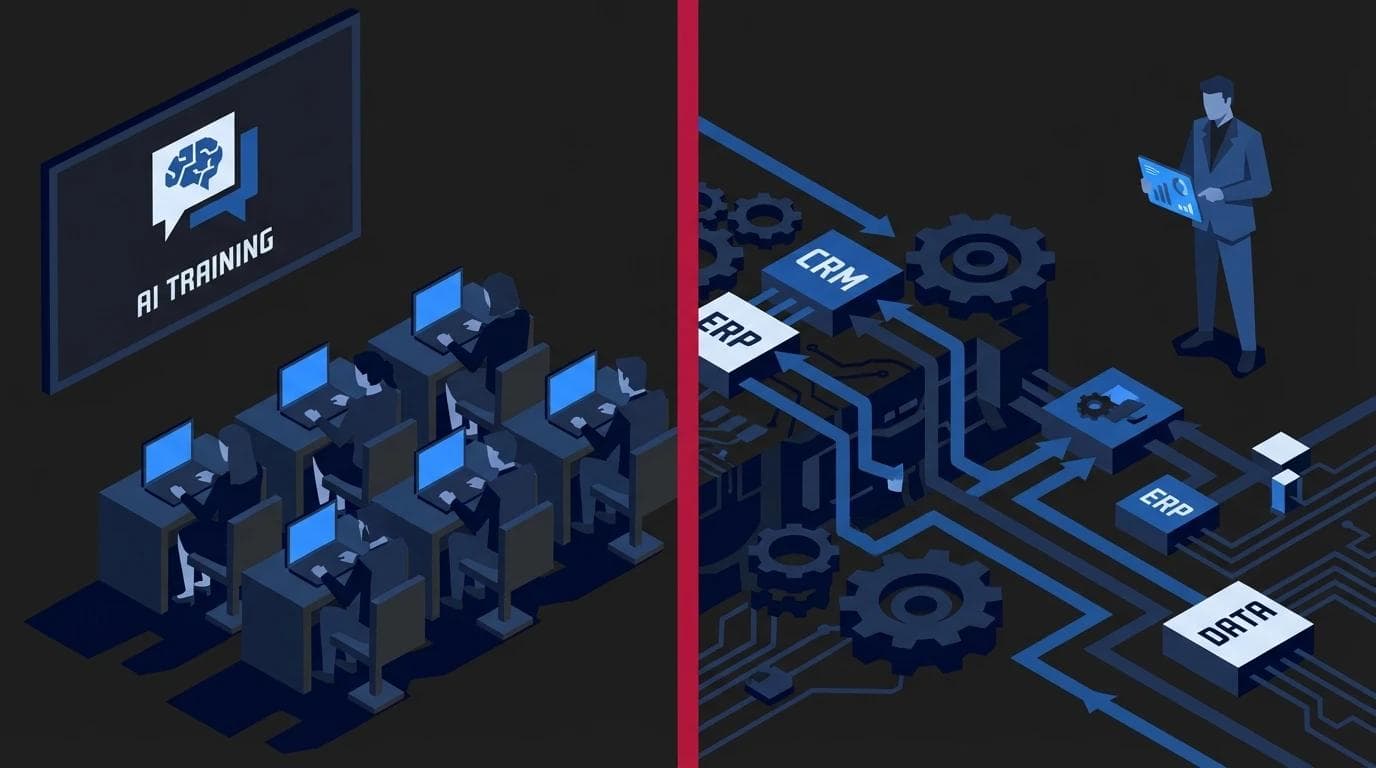
The difference between training and implementation in a business context is fundamental and often determines whether an investment in modern technology will yield a real return. Training is the transfer of knowledge to the workforce - learning how to use chatbots, designing queries, or understanding the capabilities of large language models. Implementation, on the other hand, is an engineering-driven process of integrating artificial intelligence directly into the organization's systems and workflows. While an employee must remember to use a tool after training, effective ai implementation in business ensures that technology becomes an invisible part of daily work, performing tasks automatically.
Many organizations make the mistake of assuming that a one-day workshop will handle digital transformation. However, reality can be brutal. After typical ai training for companies, participants leave fascinated by new features, but when they sit down to work on Tuesday morning, the weight of routine wins over the desire to experiment. Without a structured process, people realize that manually designing complex prompts takes too much time, so they return to old habits and manual data copying.
This is why professional ai training for business should be treated solely as a prelude to deeper structural changes. True implementation involves locking the company's business logic into a permanently organized process where technology removes the operational burden from people. Instead of teaching every employee individually how to provide the algorithm with company context every single time, it is better to focus on process automation that independently transfers information between CRM and ERP systems without human intervention.
In such a model, the engineer's role is critical. They design the architecture where custom applications communicate with AI models in a secure, closed environment. This approach frees the team from needing to think about which tool to choose at any given moment - the system simply does the boring work for them, allowing employees to focus on tasks requiring human creativity and experience.
> AI training as a foundation - building team awareness and competence
Properly planned ai training for business represents a critical starting point for any digital transformation, as even the most advanced technology will not yield profit without conscious human operation. Team education is not just about learning to use chatbots; it is primarily a process of building trust in new tools and understanding the rules of the game that change the existing way of working. Effective implementation begins with breaking resistance to change and explaining that artificial intelligence is not competition for the employee, but an efficient assistant eliminating the most tedious tasks.
Workshops and theory based on real-life scenarios are a barrier that the company team must cross without question. We are not magicians - we know that before we build excellent custom applications deep within the enterprise, users must learn the basics in test sandboxes. This is where the team discovers the potential of ChatGPT or Claude, learning why the machine is able to cut their workload in half and how to provide it with structured operational data to ensure the result is precise and secure.
A comprehensive approach to education covers several key areas:
- Prompt engineering in practice - learning precise communication with language models. Understanding that ready-made prompt lists rarely work in a company's unique context allows for the independent creation of instructions that generate real value.
- Risk management and security - explaining data confidentiality rules. A conscious employee knows what must not be entered into public tools, which directly enhances ai security in the company and eliminates the phenomenon of Shadow AI.
- Building custom assistants - learning to create Custom GPTs tailored to specific internal processes. This allows the team to stop being passive recipients of technology and become its architects.
Only after such preparation does the ground for process automation become stable. Employees who understand the mechanics of algorithms are more likely to identify areas requiring optimization and do not panic when the system takes over repetitive activities. It is foundational ai training that allows theoretical hype to be turned into measurable efficiency. You can read more about a strategic approach to competency development in our ai training for companies guide, which explains the process of building digital maturity step by step.
> AI implementation is an engineering process, not just educational
True ai implementation in business goes far beyond the ability to type queries into a chat window. It is a serious technological project where the engineer's role is critical - an educator will sketch the vision, but a developer must program the solution and plug it into the "veins" of your current IT ecosystem. Instead of teaching employees how to manually copy data between ChatGPT and Excel, an engineer builds dedicated micro-programs that eliminate slow information noise at the source.
Using engines like n8n, we design advanced automation nodes that operate constantly under the hood of your processes. Such process automation relies on strictly connecting a structured external AI model database through secure and encrypted API keys directly to your CRM, ERP, or invoice gateway. As a result, data flows automatically, and you do not incur "per transaction" commission fees, which is critical for maintaining a high ai business roi.
An engineering approach also involves writing Python scripts capable of analyzing data in ways unreachable for standard office tools. While typical ai training for business ends with theoretical demonstrations, engineering work delivers real tools with massive operational impact:
- n8n node automation - we design information flow logic that independently makes decisions based on data from your system.
- Integration via secure APIs - we connect Enterprise-class models with your data without the risk of training public algorithms on confidential information.
- Fixing information noise - we eliminate human errors in manual invoice or offer transcription through custom applications tailored to your needs.
- Python scripts on private servers - we implement self-hosted solutions, ensuring full control over technology and data security.
Such engineering-focused ai tool training concentrates on implementation that becomes a permanent company asset rather than just a temporary curiosity. The engineer steps in where "clicking" capabilities end, building the foundations for a digitization strategy that truly relieves the team from routine.
> Comparison: training vs. implementation - what delivers measurable ROI?
Measurable ROI in the case of AI depends on whether your goal is to optimize micro-tasks or rebuild the company's operational foundations. While ai training for business focuses on increasing individual employee productivity, systemic implementations automate entire value chains, generating savings impossible to achieve through education alone. As we point out in our guide to ai training for companies, the key to success is understanding the difference between a tool in a human's hand and an autonomous system.
An employee who has completed workshops and can formulate a well-learned, excellent query for ChatGPT usually recovers a fraction of valuable time during a workday, mainly by improving the quality of writing or research. This is a valuable gain, but it carries the risk of human error and fatigue. Real, massive cash flow and certain ROI only appear when engineers deploy an integrated, autonomously operating bot via API keys to a server. Such a system can independently load "hot leads" from repetitive emails into a CRM at a speed of 50 messages per minute - without human involvement, on a Saturday morning, preparing ready data for a Monday board report. To precisely assess these differences, it is worth checking how to measure ai training roi compared to the costs of custom software.
Here is a detailed comparison of both development paths:
- Effect durability - training teaches principles that the team must constantly practice so they do not evaporate. Implementation enforces these principles systemically - logic coded once within process automation works identically every time, eliminating the need for constant supervision.
- Impact on efficiency - education increases manual efficiency (the human clicks faster), while implementation generates machine efficiency (the system clicks for the human). Where ready-made solutions fail, custom applications work best, scaling the process without hiring new people.
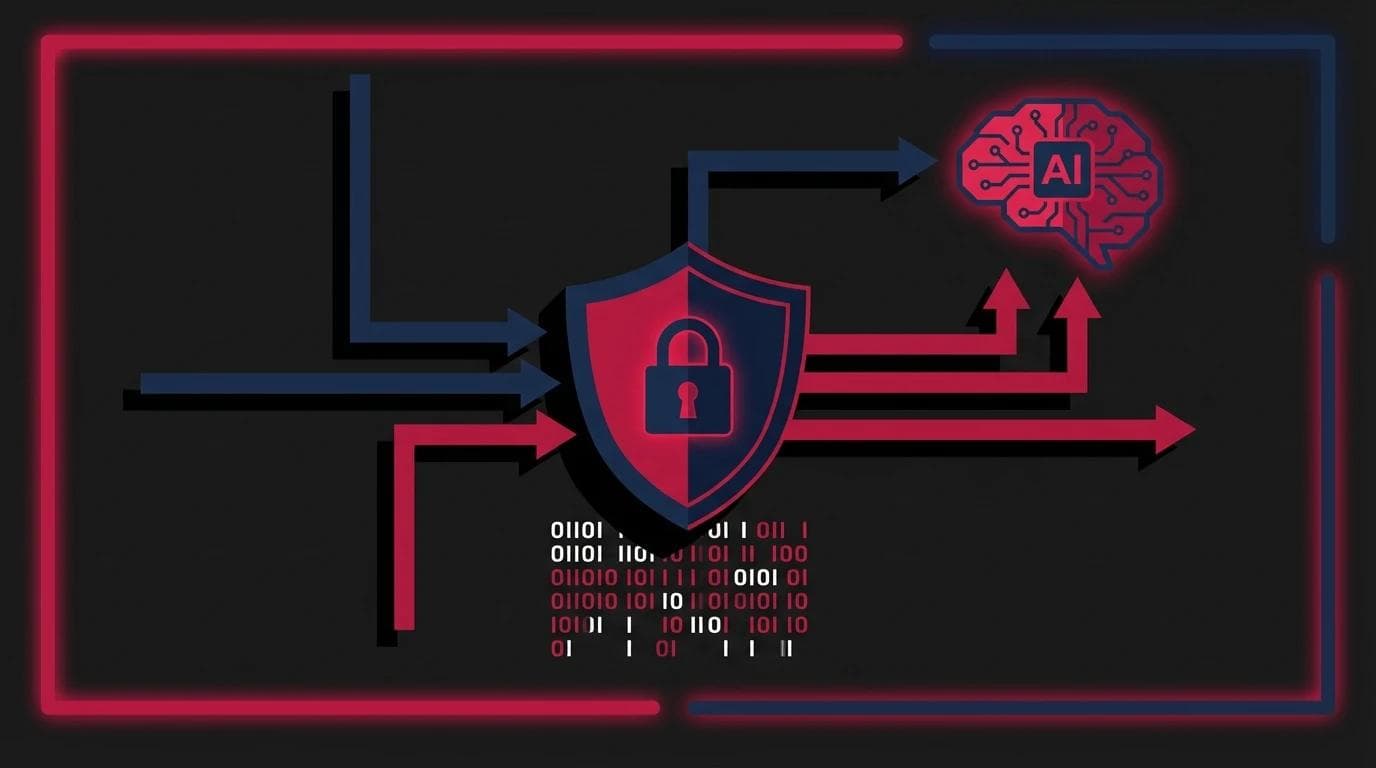
- Data security - training raises awareness of threats but does not block information leaks to public models. Only technical implementation of closed systems via Enterprise APIs guarantees that company secrets never leave your infrastructure.
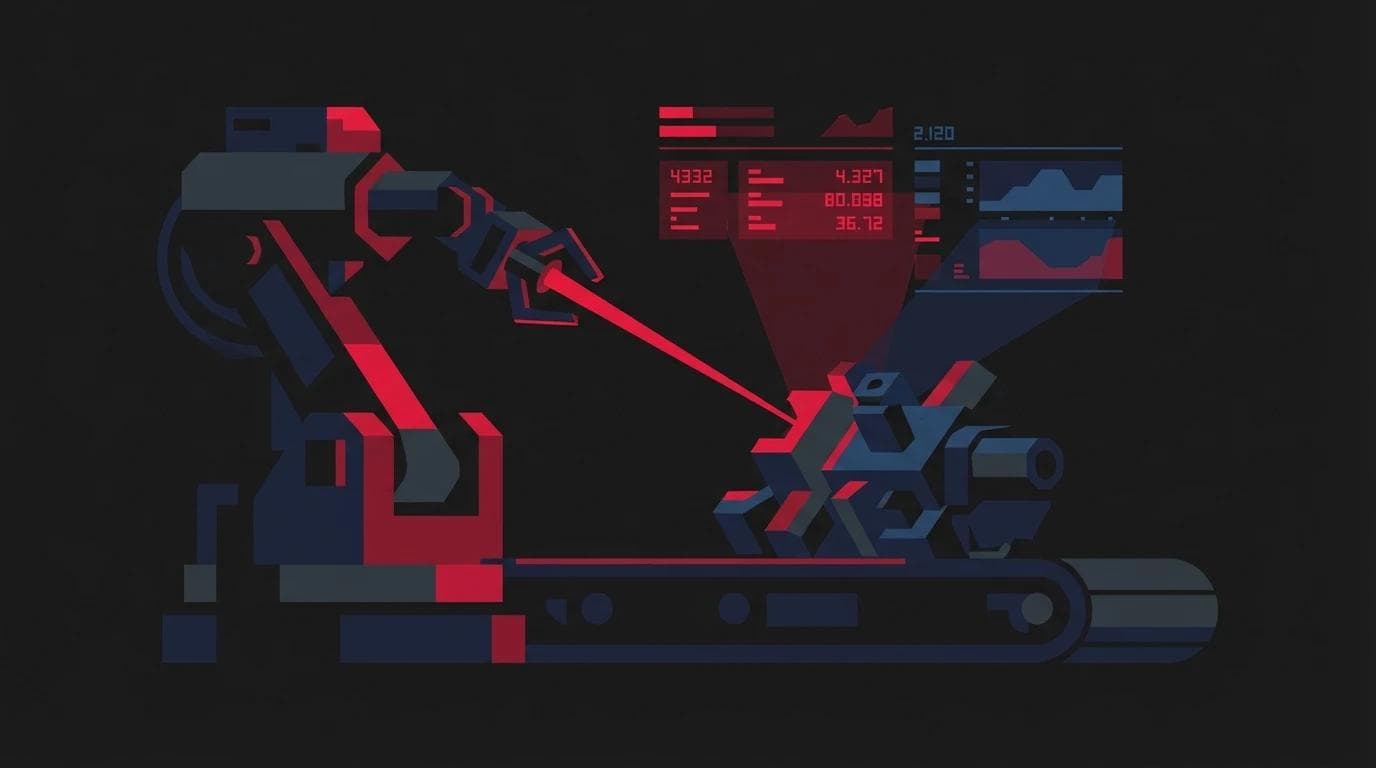
- Scope of action - AI in an employee's hands is limited to the digital world on their monitor. Thanks to iot and hardware solutions, AI implementation can go beyond the screen and optimize the work of machines on the production floor or warehouse stock levels in real-time.
The choice between training and implementation is not binary, but financial and engineering-based. If your problem is chaos in handling thousands of e-commerce queries, even the best training will not replace online store development with an integrated layer of intelligent logistics. Training is an investment in work culture; implementation is an investment in the company's autonomous assets.
> The trap of training euphoria - why knowledge without tools dies within a week
Knowledge gained during training evaporates when faced with office daily life because human nature, under time pressure, always chooses the path of least resistance. Without a ready infrastructure that takes the burden of manual language model operation off the employee, post-workshop enthusiasm turns into a return to safe, albeit extremely inefficient, habits. For ai training for business to bring real change, it must become a prelude to implementing systemic solutions that eliminate friction at the human-technology interface.
At 01tech, we are well aware of a phenomenon we call the illusion of technical enthusiasm among boards after successful symposiums. We see it often - after inspiring workshops, leaders are convinced of the team's readiness for revolution. However, employees burdened with a massive number of office tasks and old, outdated guidelines give up on experimentation in moments of stress. Fearing delays in their duties, they ultimately return to the hard logic of manual copying in spreadsheets because it seems more predictable than "fighting" with prompts.
The problem lies in the lack of operational embedding of tools. If a team, after going through ai training for companies, only gets access to a chat window, they must think every time about how to formulate a query, which is simply time-consuming. True transformation only occurs when we design:
- Invisible and automated processes - technology works deep within company systems, performing tasks without the need for manual invocation by the user.
- Deep code infrastructure - instead of relying on external interfaces, we implement process automation that is permanently plugged into the company's bloodstream.
- Unified data flow - the system manages information from lead entry to automatic invoice handling, leaving no room for errors resulting from manual transcription.
Once we build such a structure, employees have no reason to use old logic because the new ones are simply part of their natural work environment. In such a model, no one in the company has to remember anything anymore, and the return to archaism is cut off at the root. This is why custom applications tailored to specific operational needs prove so effective - they are not just an addition to work, but its new, more efficient foundation.
> How to combine education with technology to avoid wasting budget?
To avoid wasting budget when implementing AI, the model of training everyone should be abandoned in favor of a precise transformation path: process audit, targeted education, and engineering implementation. The key to success is identifying real losses in teams and creating secure technological frameworks before employees start sending company know-how to public, uncontrolled models. True savings come from automating specific, diagnosed problems, not from simply purchasing licenses or access to tools that, without a proper strategy, only generate information noise.
Start building technological power on a new and cost-effective foundation. The first step is finding "black holes" analytically with the support of opinion leaders from your own teams. Under the guidance of specialists, we conduct a thorough inventory before the workshop, allowing us to determine which processes require support. It is at this stage that it is worth checking our ai training for companies guide, which helps structure the educational process.
Data security is another pillar that must not be ignored. We build tight rules for technological novelties to eliminate the dangerous practice of throwing company market guidelines into the depths of a bottomless, common, quietly devouring public assistant. If you allow such practices, ai security in the company will be compromised, and the costs of undoing these mistakes will be enormous. Instead, it is better to rely on professional ai training for business that teaches data hygiene from the very beginning.
Only after securing procedures and training staff do we step in with our software, cutting out unnecessary steps for good. The proper combination of education and technology looks like this:
- Audit and needs analysis - we identify places where process automation will bring the highest return on investment, rather than implementing solutions blindly.
- Dedicated training - we teach employees how to use the new systems, which eliminates resistance to change and allows for reliable measurement of ai business roi.
- Implementation of engineering solutions - we design and deliver custom applications that are perfectly tailored to your company's processes, rather than just generic templates.
This model guarantees that every euro or dollar spent works toward increasing efficiency, not toward more dead accounts in SaaS tools. Remember that effective foundational ai training is an investment in people who simply know how to operate technology without endangering the company's interests.
> FAQ - frequently asked questions about AI implementation in an enterprise
AI implementation in a company is a process that must start with people and end with a solid engineering architecture. A secure and profitable transformation requires combining team education with an analytical approach to data and the existing IT ecosystem. Decision-makers are most often afraid of uncontrolled costs and data leaks, so the key is a transparent strategy that eliminates legal and technological risks as early as the workshop planning stage. The first step is not writing code, but professionally discussing the team's concerns and defining the touchpoints of new technology with old systems.
Is it worth investing in AI training if we do not plan a systemic implementation?
Investing in team competencies is the safest first step because it builds a foundation for future innovations. Before engineers start connecting cumbersome old technology in the back end with the logic of modern processes, the team must learn the basics of information hygiene. AI training for business alone allows an often terrified operational team to be calmed and shown how to build simple assistants supporting daily work. However, one must remember that without systemic integration, the impact of education alone on the company's financial result will be scattered. Therefore, we treat foundational ai training as a stage of making the business aware of threats and opportunities, which opens the door to hard automation.
What are the most common mistakes when implementing AI in SMEs?
A key error is so-called Shadow AI, a situation where employees independently enter sensitive data into public, free tools. Such uncontrolled ai security in the company exposes the enterprise to massive legal risk and loss of intellectual property. Another problem is the lack of a coherent strategy - companies often try to automate chaos instead of first organizing processes. It is important to understand the differences between publicly available and proprietary solutions, as explained by reliable chatgpt training for business. The last, but no less important, mistake is ignoring the human factor. Automating anxieties and objections is out of the question - they must be professionally discussed to show that AI is a supporting tool, not a replacement for the employee.
How long does a full AI implementation take in a medium-sized company?
Implementation time depends on the project's complexity and infrastructure readiness. The first effects in the form of operational improvements, such as process automation, can be achieved within 2-4 weeks from the end of the audit. Building more complex systems, including custom applications integrated with the company API or databases, usually takes from several months upward. It is important to monitor ai business roi at every stage, starting with the simplest tasks (Low Hanging Fruits) that give an immediate return on time and capital. System scaling then occurs organically, without the risk of wasting budget on solutions the team will not be able to operate.