SUBJECT: Digitalization in Production: Connecting Machines with IT
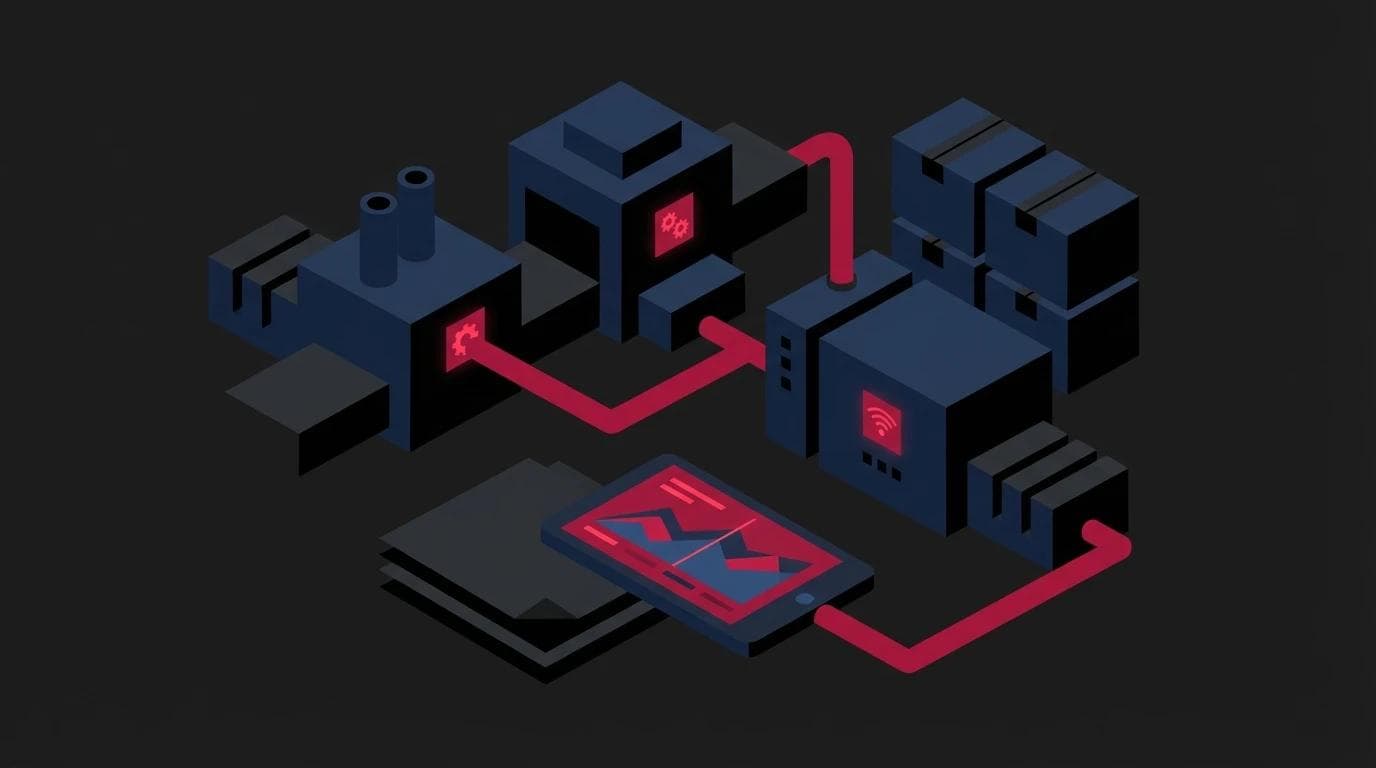
Digitalization in production and warehouse as a way to connect machines with IT systems
> Key takeaways from the article
Digitalization is the process of transforming physical and analog assets into their digital counterparts, allowing for full control over business processes in real time. The key to success is connecting the physical world (atoms) with the digital world (bits) using modern technologies such as IoT and dedicated software. This allows companies to eliminate human error, optimize supply chains, and secure their market advantage through technological ownership. Here are the most important conclusions regarding the effective implementation of digital changes: Connecting bits with atoms eliminates chaos - true digitalization of logistics and production relies on a direct connection between machines and IT systems, which completely removes unnecessary paperwork from employees' hands. Implemented automatyzacje procesów allow for a seamless flow of information without delays resulting from manual data entry. Real-time data access protects financial liquidity - the lack of precise information directly from the warehouse or production line often means freezing cash in unnecessary goods or raw materials. A properly conducted proces digitalizacji danych enables decision-making based on facts rather than hunches, which directly translates into better financial results. IoT technology revolutionizes inventory - the use of modern sensors and solutions in the field of iot i hardware dramatically reduces the time needed to manage inventory levels. Instead of hours of manual counting, systems automatically monitor resources, which reduces operating costs and minimizes the risk of errors. Code ownership is the foundation of security - when building a digital strategy, it is worth focusing on solutions that give the company full independence. By choosing aplikacje dedykowane instead of closed subscription systems, an enterprise builds lasting technological capital, which is discussed further in our strategia finansowania cyfryzacji. Measurable ROI is the only indicator of success - every IT investment must bring specific returns, whether in the form of time savings or reduced labor costs. Analyzing the korzyści z cyfryzacji, it is clear that companies that treat technology as a tool to achieve specific business goals, rather than a fashion trend, gain the most.
> What is the digitalization of physical processes in a modern enterprise
Digitalization of physical processes is the process of integrating machines and operational activities with the IT ecosystem to eliminate manual reporting. In a modern enterprise, this means an automatic flow of data from the production floor or warehouse directly to management systems using sensors, controllers, and mobile devices. Instead of relying on fallible human memory, companies use technology to monitor resources in real time, which forms the foundation of a modern business strategy.
In practice, this is a fundamental shift from the "human watches and enters" model to the "machine reads and sends" model. Transcribing warehouse status from a dirty paper delivery note to an Excel file is not digitalization; it is a relic of the past that generates unnecessary costs and delays. Real change occurs when intelligent automatyzacje procesów are implemented, connecting the physical and digital worlds without unnecessary intermediaries.
When modern tags, scanners, or weight sensors are introduced into the production or logistics process, the weight of the goods automatically sends the appropriate signal to the database. By utilizing advanced IoT i hardware, an enterprise relieves the warehouse worker of burdensome bureaucracy and effectively cuts shipping errors. Data collected directly at the source allows for much more precise analytics than any manually completed spreadsheets.
However, effective operational transformation requires an appropriate programming background that can handle the influx of information from sensors. Often, aplikacje dedykowane turn out to be the optimal choice because they can perfectly mirror the specific material flow in a given factory. Such an individualized strategia cyfryzacji allows not only for cost optimization but, above all, for building a lasting competitive advantage based on technological ownership.
Digitalization of physical processes brings measurable benefits in several areas:
- Elimination of human error - data sent automatically does not contain typos or mistakes resulting from employee fatigue.
- Live data access - management sees the actual production status at the same second the machine finishes its work cycle.
- Automatic material settlements - the system itself subtracts used raw materials from the warehouse based on signals from the production line.
- Safety improvement - intelligent systems can monitor machine operating parameters and warn of anomalies before a failure occurs.
> Case study - how machine integration with the system changed production line efficiency
Integrating machines with an IT system is not just a trend, but above all, a real optimization of operating costs. In many Polish production plants, the lack of access to real-time data is a major barrier to development. We saw this when implementing a project for a client whose reporting system was based on paper sheets and subjective operator assessments. The following case study shows that an appropriate strategia finansowania cyfryzacji and focusing on technological ownership brings measurable business results.
Problem diagnosis and identification of bottlenecks on the floor
Before starting the work, the client's production floor operated in a reactive mode. The main challenges included significant reporting delays (performance data reached management with a 24-hour lag) and numerous human errors when manually entering parameters into Excel sheets. The lack of control over micro-downtimes meant that production planning was prone to significant error.
Analysis showed that the biggest problem was invisible time loss. Employees could lose valuable hours during a shift searching for pallets with goods, which directly hit profitability. In such situations, professional wdrożenie technologii cyfrowych is key, as it eliminates the element of uncertainty and allows for the construction of a system based on hard facts rather than management assumptions.
Implementation of IoT sensors and dedicated software
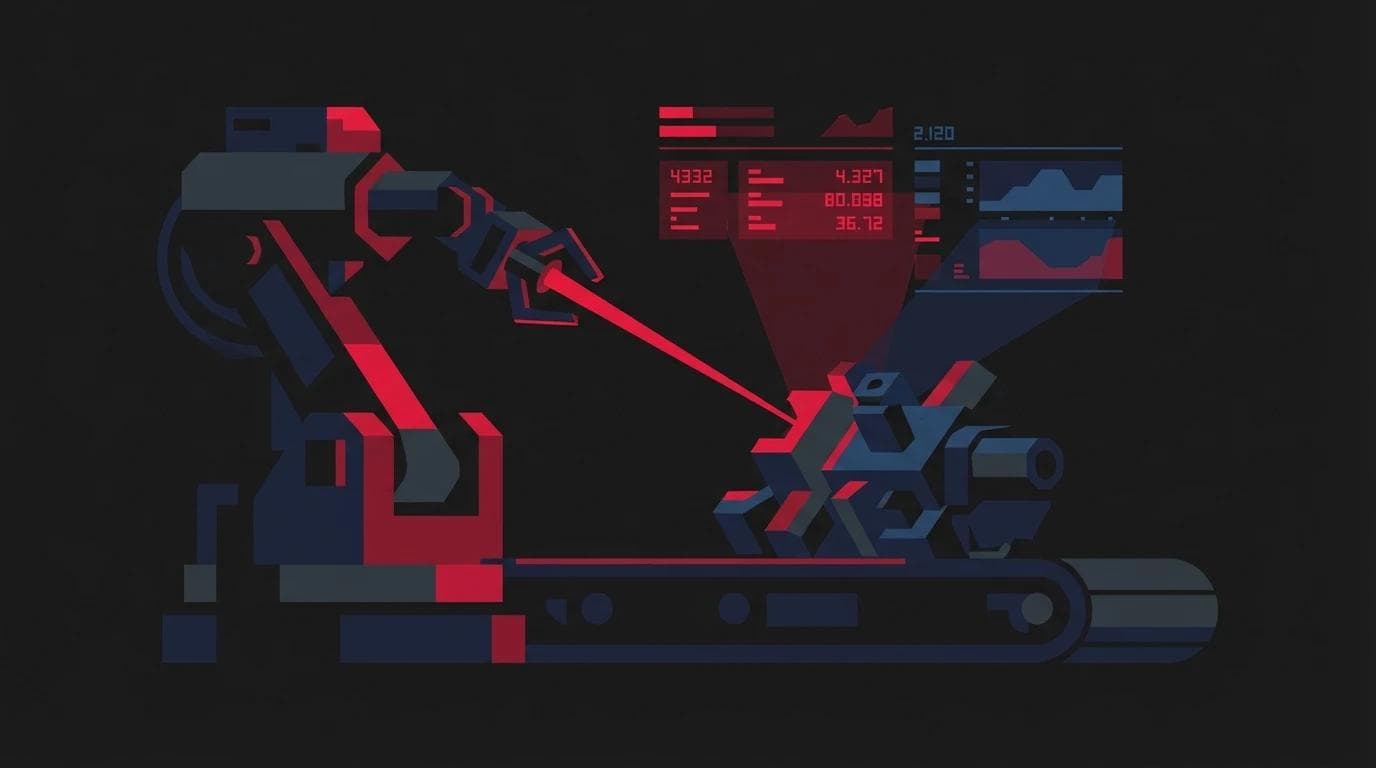
We based the solution on a proprietary architecture combining hardware and software layers. We equipped the warehouse and production floor with a simple but extremely effective infrastructure based on BLE tags and stationary readers. The iot i hardware we used allowed for automatic tracking of material movement without involving the machine operators' attention.
Data from sensors goes directly to the cloud, where it is processed by aplikacje dedykowane, created for the specific process requirements of this particular plant. As a result, we eliminated human mediation in the process of collecting data on the machine work cycle, which allowed for 100% precision in monitoring production statuses in real time.
Financial and operational results one year after the change
The effects of the implementation exceeded initial assumptions, showing how important the measurable korzyści z cyfryzacji procesów biznesowych are. The implementation of targeted automation cut order picking time in half, which allowed for increased throughput of the entire line without purchasing new machines. The return on investment (ROI) was rapid and achieved almost immediately thanks to:
- Reduction of overtime - better planning and elimination of component searches allowed production to be completed within standard working hours.
- Decrease in unknown shortages - precise tracking of resources on the floor eliminated inventory losses.
- Increase in OEE index - automatic identification of bottlenecks allowed for a 15% reduction in changeover times.
- Predictive maintenance - monitoring machine operating parameters allows for equipment servicing before a costly failure occurs.
By choosing comprehensive automatyzacje procesów, the company not only increased profits but gained full control over data, which is the foundation for further business scaling.
> Why owned digitalization is better than a SaaS subscription
The choice between proprietary software and a subscription model (SaaS) is a key decision that defines a company's technological profitability for years. Owned digitalization is better because it eliminates hidden scaling costs, ensures full sovereignty over data, and allows for the building of a lasting company asset instead of generating a constant operating cost. Owning the source code means that every subsequent optimization increases the value of the enterprise, not just the external provider's margin.
From a market perspective, WMS and MES systems provided in the SaaS model are a black hole for the budget. You pay for every newly connected machine, every new employee with a scanner on the production floor, and every megabyte of data uploaded. By opting for aplikacje dedykowane, you escape these traps and gain an advantage described by every effective strategia cyfryzacji. You get a scalable core that belongs to you, which is the foundation for a secure wdrożenie technologii cyfrowych in a dynamically growing environment.
The benefits of owning technology include:
- Cost predictability - no matter how large your warehouse becomes, software costs remain flat, allowing for real savings at a large scale of operations.
- Full infrastructure control - by integrating iot-i-hardware, you can be sure that data flowing from machines is secure and not processed by third-party servers without your knowledge.
- No vendor lock-in - code ownership is the freedom to choose service partners and the ability to develop the system independently, which directly affects business security and continuity.
In the context of security, digitalizacja danych in a closed, proprietary ecosystem minimizes the risk of information leakage to competitors using the same public cloud. By creating proprietary solutions with 01tech, you invest in a foundation that grows with the company. Such a strategia finansowania cyfryzacji - własność kodu makes modern automatyzacje procesów a high-return investment rather than a monthly burden that hampers expansion with every new hire or machine park modernization.
> Warehouse process automation based on real-time data
In modern logistics, real-time data has ceased to be a luxury and has become a foundation for survival. Effective automatyzacje procesów allow for the elimination of human errors in the tedious counting of inventory, replacing them with precise readings from sensors and mobile terminals. As a result, the WMS system does not inform us about what happened yesterday, but about what is happening on the shelves at this very second.
The use of advanced automation means that shortages on the shelf report themselves, without the warehouse worker's involvement. When stock levels drop below a defined safety point, platforms such as n8n, integrated via API with your technology park, automatically generate a draft email to the supplier and send a notification to the shift supervisor on the company Slack. In such a model, the human role is limited only to clicking the Accept button, while the entire order logistics happens in the background. For such a system to work flawlessly, a correctly conducted proces digitalizacji danych is key, guaranteeing the consistency of information flowing between hardware and software.
Many companies in the SME sector make the mistake of trying to fit their unique operations into the rigid frameworks of subscription systems. Meanwhile, aplikacje dedykowane offer flexibility that allows for deep integration with specific machines and facility infrastructure. Building your own tools is also part of a broader vision, which is the strategia finansowania cyfryzacji, assuming the building of technological capital within the organization instead of eternally paying for licenses.
Implementing an intelligent warehouse requires connecting the software layer with physical devices. Modern iot i hardware solutions allow for automatic monitoring of parameters such as temperature, humidity, or pallet location in real time. Here are the key benefits of such integration:
- Elimination of downtime - systems predict the need to reorder goods before production is stopped.
- Precise analytics - access to data on stock rotation allows for optimizing the distribution of assortment in the hall.
- Scalability of operations - automation of repetitive tasks enables handling a larger number of orders without the need for a drastic increase in employment.
By investing in tailor-made solutions, a company gains full control over the business logic of its processes. Data collected directly from production lines or shelves becomes the most valuable asset, allowing for an immediate response to market changes and optimization of operating costs in a way that remains unattainable for competitors based on analog methods.
> Frequently asked questions about digitalization in the physical world
Entrepreneurs in the SME sector often approach industrial innovations with caution, fearing giant costs and the need to replace the entire infrastructure. However, digitalization in the physical world is not about tearing down the old order, but about a smart technological superstructure that allows you to squeeze more out of already possessed resources. Below we answer the key questions that most often arise during strategic consultations.
Can old machines be connected to a modern system?
Many companies fear that digital transformation forces a costly replacement of the entire fleet of devices. However, the engineering approach used in IoT i hardware projects shows that installing modern monitoring systems does not require purchasing new forklifts or lathes. We use so-called overlay sensors for this purpose, which allows for reviving old equipment by attaching small modules to it. Such sensors measure vibrations, temperature, or location, sending data to the cloud via external PLC controllers, without the need to invest millions in new machine parks.
What is the average return on investment for IoT?
The profitability of such implementations depends on the scale, but usually korzyści z cyfryzacji become measurable as early as 6 to 12 months after the system is launched. Monitoring systems eliminate bottlenecks and unplanned downtimes, which directly translates into an increase in production efficiency. However, it is worth remembering that the konsekwencje cyfryzacji carried out without a clear strategy can generate unnecessary expenses. Therefore, effective automatyzacje procesów and precisely designed aplikacje dedykowane should always be preceded by a reliable ROI analysis.
What competencies must the team operating IoT systems have?
Implementing digital monitoring does not require programming knowledge from employees, but rather an open attitude towards new tools and changing existing habits. After implementation, the team gains new possibilities:
- Parameter monitoring - employees can react to anomalies before a serious machine failure occurs.
- Performance analysis - operators see the real impact of their work on the pace of order fulfillment in real time.
- Documentation reduction - automatic data recording eliminates the need for manual completion of burdensome paper reports.
A proper strategia finansowania cyfryzacji must include time for employee adaptation and professional szkolenia AI dla biznesu. Often, it is the optymalizacja procesów biznesowych carried out by a conscious team that brings the company the greatest operational savings. If you have any doubts regarding the technical aspects of implementation, please contact us.