SUBJECT: Digitalization Strategy and Technology Ownership

Digitalization strategy and technology ownership as a way to avoid SaaS traps
> Key takeaways regarding technology financing strategy
Digitalization strategy in a modern enterprise is based on understanding the fundamental difference between owning and renting tools of trade. The key takeaway is that long-term profitability depends on decoupling operational costs from the scale of employment, which often forces a shift from subscription models toward proprietary solutions. Choosing the right financing model determines whether technology will be your asset or a constant burden on the budget, so it is worth analyzing the following aspects before making an investment decision.
- SaaS subscriptions as a hidden tax - at 01tech, we explain it simply: subscriptions are often a tax on company size. The more employees you hire, the higher the licensing fees you must pay, which in practice means that your business success is burdened with an additional tribute to the software provider.
- Technology ownership instead of eternal rental - by building aplikacje dedykowane, you create a tool that you own, rather than an eternal invoice for rental. This allows you to avoid sudden subscription price hikes and gives you full control over the source code and the system's future development directions.
- Aligning tools with processes - true digitalization should arrange processes for you, not force your company to adapt to what a ready-made box can do. Through automatyzacje procesów, you can eliminate bottlenecks specific to your industry, which is impossible with rigid, mass-market solutions.
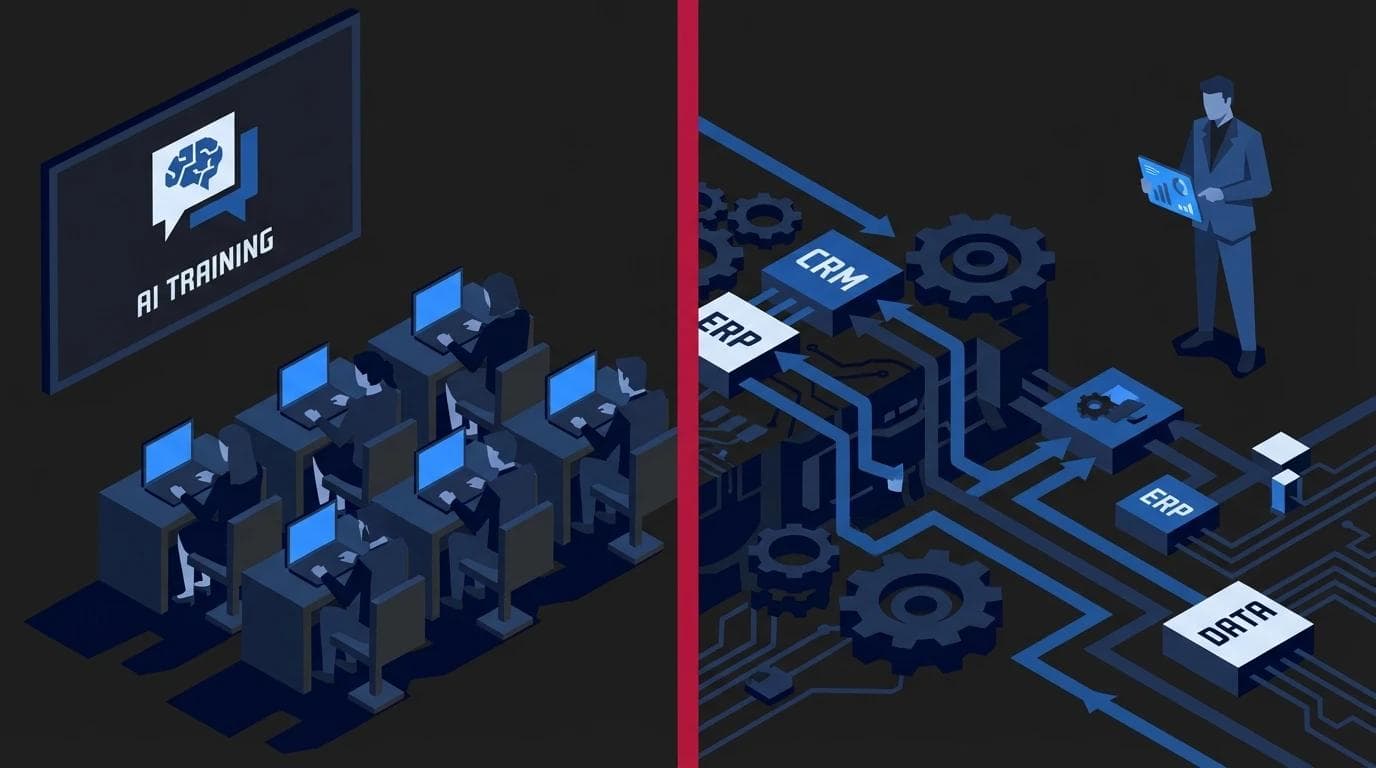
- Integration of infrastructure and competencies - the financing strategy must include not only software but also iot i hardware, which allow for collecting unique data from the company's physical processes. For these investments to be profitable, parallel szkolenia ai dla biznesu are necessary, so the team can leverage the potential of new technology in daily tasks.
Every company is at a different stage of development, so the final choice should be preceded by a reliable ROI analysis. If you need support in assessing which path will be more beneficial for you, we encourage you to kontakt our advisory team.
> What is a profitable digitalization strategy and why technology ownership matters
A profitable digitalization strategy is the conscious building of technological assets that increase your company's valuation instead of generating only endless operational costs. In practice, it is a strategic choice between creating intellectual property (ownership of code and infrastructure) and becoming dependent on external SaaS providers. Real profit appears when technology becomes a unique tool in the hands of the enterprise, rather than just a digital equivalent of a constant electricity bill.
By renting exactly the same system that your competition uses, you give up any technological advantage from the start. In the world of ready-made solutions, everyone has the same limitations and the same development ceiling, which is why aplikacje dedykowane work best in such situations, as they allow for full customization of tools to the company's unique processes. Profitable digitalization is about creating an environment that does what ready-made programs cannot, ensuring that technology works exactly the way your business earns money. You stop paying extra for features that no one in the company uses and start investing in tailor-made solutions.
Technology ownership is crucial for building long-term business resilience:
- Control over business logic - your automatyzacje procesów hosted on your own server (e.g., on n8n) guarantee that key company operations will not be suddenly changed or turned off by an external operator.
- No technological ceiling - by owning the code, you can freely develop the system as the company grows, avoiding the rigid corset of features typical of subscription platforms.
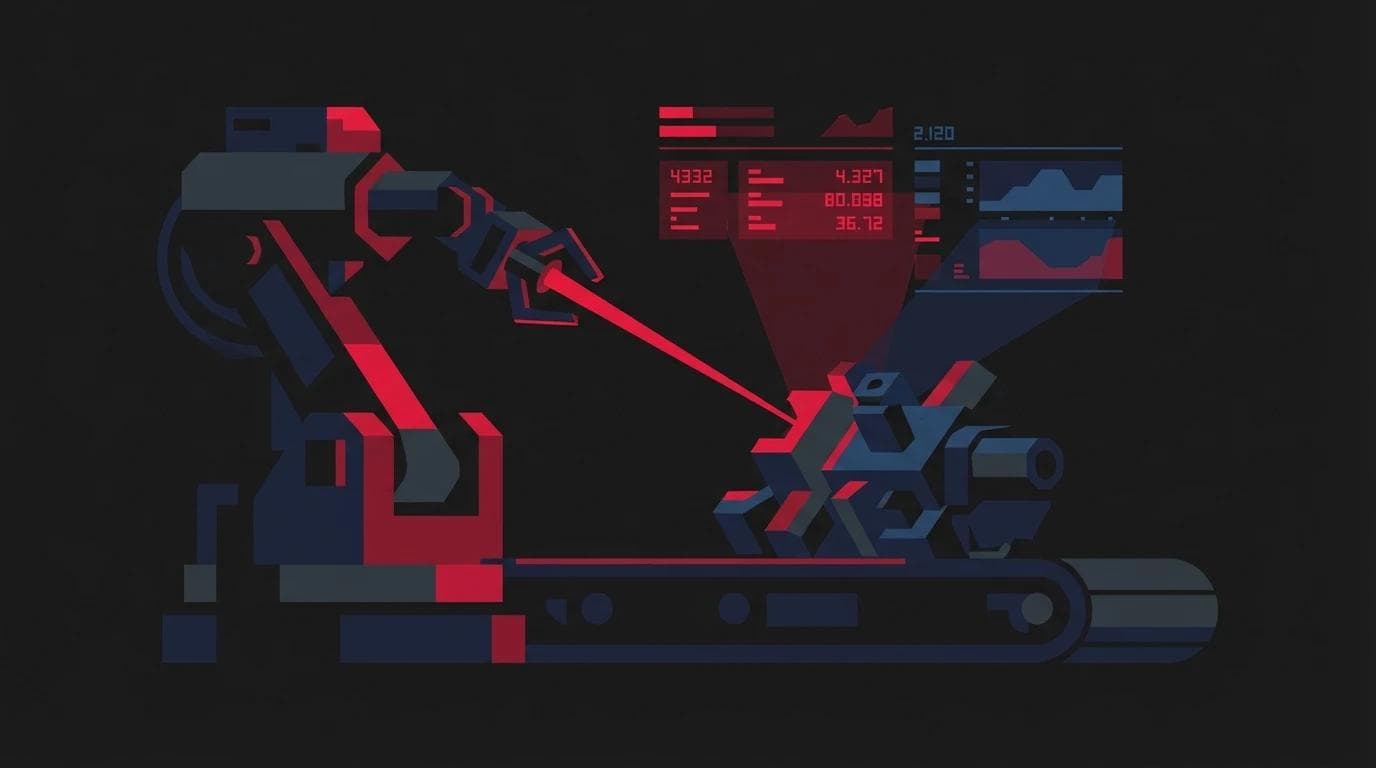
- Integration of data from the physical world - dedicated IoT i hardware solutions allow for collecting data directly from production lines or fleets, creating information assets that competitors cannot access.
- Competitive competency advantage - by investing in szkolenia AI dla biznesu, you prepare employees to operate unique tools, which increases their efficiency and makes it harder for other entities to buy out your know-how.
Ultimately, profitability in digitalization means that with each year, your company becomes technologically stronger, not just more burdened with subscriptions. To check which elements of your tech stack should transition to ownership, it is worth establishing kontakt with a team that will help turn IT costs into lasting enterprise assets.
> Financing digitalization in the CapEx vs OpEx model
The choice between CapEx (capital expenditures) and OpEx (operating expenses) in IT is a decision between renting and owning key tools of trade. The OpEx model, dominant in SaaS solutions, offers a low entry threshold but burdens the monthly financial result and does not build lasting company value. Investing in aplikacje dedykowane in the CapEx model allows you to treat software as an asset that increases the company's valuation and eliminates dependence on external providers.
SaaS is actually digital rental. You pay every month for access to the platform, and the moment you stop paying, the system simply disappears along with your data and processes. Proprietary software is a one-time investment expense that, after the implementation period, generates only trace maintenance costs.
Investing in proprietary technological capital (CapEx) offers specific strategic benefits:
- Increase in company valuation - proprietary source code is a component of the company's assets, which realistically raises its value during audits or investment processes.
- EBITDA improvement - moving expenses from operational to investment costs improves operational profitability, which is key for the board and shareholders.
- No technological ceiling - tailor-made systems allow for deep automatyzacje procesow that are not limited by the rigid frameworks of mass products.
We had a client from the logistics industry who spent 15,000 PLN per month on a ready-made warehouse system through subscriptions and per-employee fees. Writing a dedicated application cost more at the start, but the investment paid off completely after just one year. Now the client owns the system, pays only minimal amounts for the server, and their operating margin has significantly increased.
Technology ownership is particularly important when integrating the digital and physical worlds, for example, by implementing iot i hardware solutions. In such cases, full control over the software guarantees security and production continuity without the risk of a sudden price change by an external operator.
Building your own infrastructure, however, requires preparing the team for new challenges. Effective szkolenia ai dla biznesu help management understand how to maximize the return on investment in acquired technologies. If you are wondering which financing model will be optimal for your scale of operation, we invite you to establish direct kontakt for an ROI analysis.
> Why the SaaS model can become a trap for the growing SME sector
The Software as a Service (SaaS) model is often seen as an ideal solution for startups; however, for dynamically developing companies in the SME sector, it often turns into a so-called golden cage. Although subscription costs seem low and predictable at the beginning, as the scale of business grows, the bills start to swell rapidly. Every new user, additional module, or exceeded data limit generates costs that, over a few years, can many times exceed the investment in a proprietary solution. The biggest threat, however, is the lack of control over the tool's future - the software manufacturer can raise prices or change licensing terms overnight, and you have no real way out because moving a huge database to another system is a logistical and expensive nightmare.
Dependence on a provider, known as vendor lock-in, makes your company a hostage to someone else's product roadmap. If your business model evolves and you need a new, specific feature, you have to ask the provider's support and wait months for an answer that often sounds like: we don't have that in our plans. As a result, instead of a coherent ecosystem, companies start patching system gaps with dozens of spreadsheets, which wastes the potential offered by professional automatyzacje procesów. In such a situation, the only way to regain control is to bet on aplikacje dedykowane, which provide full technological ownership and no limits on developing unique competitive advantages.
The difference between changing format and changing process in IT strategy
Many entrepreneurs fall into a mental trap, equating digitalization with a simple change in data storage format. Moving records from a paper binder to Excel or a simple cloud tool is only a change of medium, not a real digital transformation. True digitalization consists of optimizing and redefining the way a company operates, which requires flexible tools tailored to the specifics of a given business. Ready-made SaaS solutions often impose a rigid way of working, forcing the company to adapt to the program's logic instead of letting the program support the enterprise's unique processes.
When a company tries to implement more advanced technologies, such as iot i hardware, the rigid frameworks of boxed systems become an impassable barrier. The lack of deep integration means that data from production or the warehouse does not flow smoothly into the management system, forcing employees to manually rewrite information. This is where the advantage of proprietary code manifests - it allows for building processes from scratch, eliminating bottlenecks that no mass product can predict. If you want to learn how to realistically change processes in your organization, it is worth considering professional szkolenia ai dla biznesu, which will help you understand where simple digitalization ends and true technological advantage begins. To discuss an individual strategy for escaping SaaS limitations, we encourage you to get in direct kontakt with our experts.
> How to invest in technology on ownership to actually increase ROI
The key to a high return on investment (ROI) in technology is not purchasing the most expensive licenses but taking ownership of key digital processes. Investing in tailor-made solutions allows for eliminating repetitive, manual tasks that generate huge, hidden costs every working day. Instead of paying a subscription for general features, an entrepreneur finances a one-time tool tailored to their specific processes, which frees up human resources and allows for scaling without increasing operational costs.
Instead of immediately buying a huge system for millions, it is worth starting with the places where your company loses the most man-hours. The fastest return is provided by discrete automatyzacje procesów running in the background, which tie together the tools already present in the company. You pay once for implementation and gain monthly savings on full-time positions and full control over the created source code.
If your people manually rewrite data from orders to the accounting system, we build a script that does it for them flawlessly and instantly. Such a one-time investment frees up dozens of hours per month, which on an annual scale translates into specific financial savings exceeding the cost of the IT service itself. To realistically increase ROI, you should focus on three pillars of technological ownership:
- Elimination of technical debt - by choosing aplikacje dedykowane, you avoid the limitations imposed by ready-made boxed platforms, which often require expensive workarounds and external plugins.
- Integration of the physical and digital worlds - in production and logistics sectors, professional IoT i hardware allow for collecting data directly from machines, which completely cuts the time needed for manual inventory.
- Staff education - even the best tools will not work without the team's knowledge, which is why szkolenia AI dla biznesu help employees understand how to optimally use new digital assets to automate their own tasks.
By building technological ownership, you stop being just a tenant of someone else's solutions and become the owner of digital assets that raise the value of the entire enterprise. If you want to check which process to start modernization from, skontaktuj się z nami to conduct a technological audit and analysis of potential profits.
> Frequently asked questions about digitalization strategy and IT financing
The decision to move away from ready-made solutions in favor of proprietary tools often raises concerns about costs and security. In reality, a well-thought-out digitalization strategy allows you to avoid hidden subscription fees that scale as the company grows. The key is understanding that technology should work for the business, not the other way around.
Is code ownership always more profitable than SaaS
The break-even point, or the moment when building your own solution becomes cheaper than paying for a subscription, usually occurs faster than boards assume. The main reason is the lack of a "per-user tribute" - in your own system, you do not pay extra for every new employee or client using the tool.
Low maintenance costs - owning the code means that your only fixed expenses are usually the cost of your own VPS server and ongoing security updates. Scalability without barriers is possible when you choose aplikacje dedykowane, because you invest in a company asset that depreciates over time instead of generating infinite operational costs (OPEX).
What are the main risks of lacking your own source code
The biggest risk of the SaaS model is the loss of full control over data and the organization's operational continuity. If an external provider gets into financial trouble or drastically changes its pricing policy, your company is blocked without the possibility of easy migration to another provider.
Data security - your own self-hosted environment is much safer because your invoices, customer data, or trade secrets do not fly around the external clouds of tech giants. You have full freedom in modifying business logic, which is crucial when implementing, for example, non-standard automatyzacje procesów. In the event of an external service failure, your company does not come to a standstill because you have the full right to manage the entire infrastructure.
How to start building your own technological ecosystem
It is worth starting the investment with an audit of one, most painful process in the entire organization. Instead of buying a huge system that employees will hate due to its complexity, it is better to make one small, proprietary mechanism that works perfectly.
Small steps method - identify the bottleneck where human errors are most costly, and then implement a solution that effectively eliminates them. Look for a partner who will not only write the code but also conduct szkolenia AI dla biznesu so the team can effectively use the new tools. Sometimes the first step is simply kontakt with an expert and an honest conversation about what is currently hindering your growth, whether in the area of software or iot i hardware.