SUBJECT: E-documentation: Integrate Invoice and HR Workflows
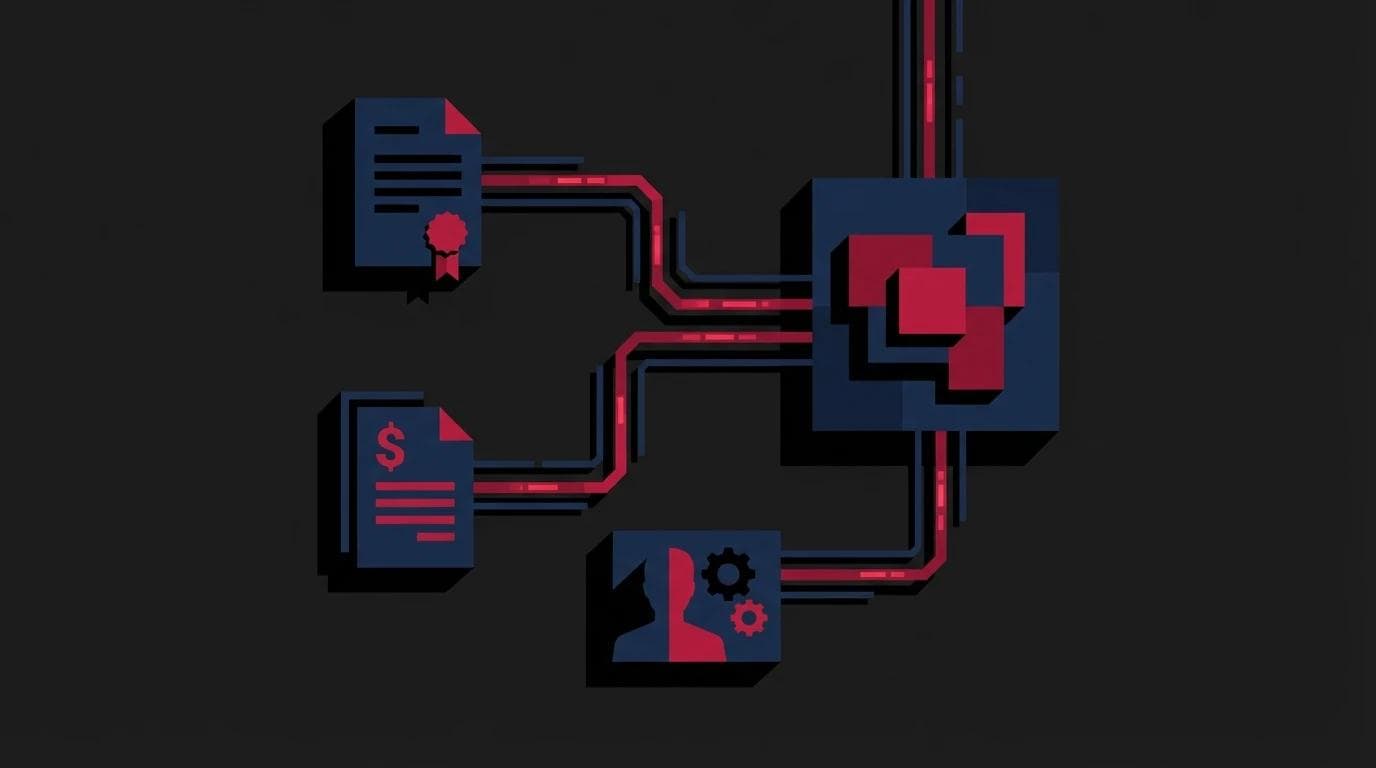
E-documentation in practice: how to combine invoice and HR workflows in one system
> What is e-documentation and how to effectively connect scattered processes in a company
E-documentation is a digital information resource management system that goes beyond simply storing scans on a drive. It is an integrated operational mechanism where data from invoices, contracts, and HR records circulates freely between departments, eliminating information silos and manual data entry. Effectively connecting scattered processes involves creating a single, coherent ecosystem where every business event automatically initiates the next step in the operational chain, ensuring full transparency of activities.
Many companies fall into the trap of thinking that uploading a PDF invoice to a Google Drive folder constitutes full document digitalization. In reality, this is merely archiving, which does not solve the problem of fragmented knowledge. True transformation occurs when the moment a client signs a contract in the CRM, it automatically closes the sales opportunity, triggers an invoice in accounting, and generates a notification for the project delivery department.
To achieve such fluidity, a well-thought-out digitalization strategy is essential, focusing on integrating tools within a single, dedicated system. Often, off-the-shelf solutions do not allow for such deep process linking, which is why dedicated applications work best for maintaining technological ownership. Thanks to them, sales representatives do not waste time copying data, and management gains access to reliable reports generated in real time.
A lack of a coherent plan in this area is a direct path to chaos, and the negative consequences of digitalization without a strategy can be extremely costly. Scattered spreadsheets and dozens of incompatible programs create bottlenecks that stifle growth. The solution lies in advanced process automation that binds finance, HR, and production into a single organism.
Key elements of effective e-documentation include:
- Central data repository - one version of truth available to all authorized employees, eliminating errors resulting from working on outdated documents.
- Automatic workflows - document flow paths that independently monitor approval and payment deadlines, relieving the team of repetitive administrative tasks.
- Unified user interface - reducing the number of tools employees must navigate, which speeds up onboarding and drastically reduces the risk of human error.
> Key takeaways from implementing integrated document flow
Implementing integrated document flow primarily leads to a drastic reduction in operating costs and regaining full control over information flow within the organization. True e-documentation allows for the elimination of manual data entry by 90%, which immediately translates into increased team productivity and minimization of costly mistakes in business processes.
- Maximum operational efficiency - the elimination of manual data entry makes process automation the driving force of the company. As a result, employees regain time previously wasted on repetitive office tasks, allowing for much faster contract fulfillment.
- Instant access to knowledge - a single, central platform guarantees that you know where every contract is in a fraction of a second. Properly planned document digitalization ensures that searching for archived documents is no longer a logistical problem but a simple search function accessible from anywhere.
- Technological ownership and savings - creating your own custom-made ecosystem frees you from paying separate subscriptions for HR, sales, and accounting packages for every employee. Such dedicated applications fit into a long-term digitalization financing strategy, building real company assets in the form of owned code instead of perpetual SaaS tool rentals.
- Security and information consistency - an integrated system acts as a shield protecting data from being scattered across uncontrolled communication channels. When analyzing the measurable benefits of digitalization, it is clear that data centralization is not just a convenience but the foundation of cybersecurity and intellectual property protection.
A modern approach to e-documentation prepares the company for advanced AI training for business, as artificial intelligence algorithms require organized datasets for learning and automatic reasoning. If you want to see how these solutions can revolutionize your company, it is worth establishing direct contact to consult on your organization's specific needs and avoid technological debt.
> Why dedicated e-documentation ownership builds an advantage over the SaaS model
Technological ownership in the area of e-documentation is a strategic shift from subscription costs (OpEx) to capital investment (CapEx), guaranteeing full independence from external providers and their dynamically changing price lists. Choosing a proprietary system allows for the creation of an integrated ecosystem where data flows without barriers between modules, which is nearly impossible in a fragmented SaaS model. Such a digitalization financing strategy builds real company value, treating software as a permanent asset rather than a monthly renewable service.
A common problem in the SME sector is tool fragmentation. Imagine buying one SaaS for invoicing and a completely different system for managing leave requests. As a result, you pay double subscriptions, and both programs often cannot work together effectively, creating information chaos. At 01tech, we solve this problem by designing so-called Mother-Systems. We build a dedicated application for you, ensuring all key operations take place under one operational roof. By utilizing dedicated applications, you eliminate the technological ceiling and ensure the system grows with your business.
Investing in code ownership brings a range of tangible benefits:
- Financial independence - you pay for implementation once and become free from subscription hikes, making the benefits of digitalization visible in the company's annual balance sheet.
- Deep data integration - an owned system allows for seamless process automation, where e-documentation information immediately feeds other business areas without manual data copying.
- Information sovereignty - considering data digitalization and company security, owning the system on your own server provides full control over who has access to sensitive documents.
- Development flexibility - while document digitalization in a small company in a SaaS model often ends with a lack of specific features, a dedicated system can be freely modified to meet unique needs.
When we analyze the step-by-step data digitalization process, maintaining long-term information consistency is key. In a SaaS model, any change by the provider can affect your processes or force costly migrations. Owning your documentation is the foundation of a stable business that does not fear sudden service shutdowns by an external corporation or terms of service changes that could paralyze daily work.
> Step-by-step guide on how to replace five different tools with one platform
The consolidation process begins with a major cleanup, which is the foundation when a digitalization strategy based on technological ownership is implemented. We gather all documents circulating in the company and ruthlessly remove duplicates to avoid the mess often described in the consequences of digitalization carried out without a clear vision. Next, we design the data architecture so that information about a client from a contract automatically feeds other system modules. This approach makes dedicated applications a central knowledge repository rather than just a digital folder. Every piece of the puzzle must be thought through, which is facilitated by a correctly performed digitalization process, guaranteeing information consistency across the entire enterprise.
Invoicing workflow automation and integration with payment systems
Implementing a financial module allows for the complete elimination of manual data entry, which directly impacts the benefits of digitalization visible in a quick return on investment.
- Automatic data reading - systems using text recognition algorithms identify key invoice parameters and send them to the approval path without human intervention.
- Integration with payments - modern process automation connects e-invoices with payment gateways, allowing for immediate booking upon receiving transaction confirmation.
- Elimination of human errors - thanks to rigid business rules, the system prevents double payment of the same document or booking an invoice with an incorrect tax ID.
Digital contracts and secure digital employee files in one place
Combining the legal and HR modules into one ecosystem is the key to maintaining absolute consistency in personal data and easy access to collaboration history.
- Seamless data flow - data from contracts, such as amounts and deadlines, automatically flows into the invoice database and the team's work calendar, eliminating the need for manual task creation.
- Intellectual property protection - documentation centralization ensures that data digitalization effectively protects sensitive company information from uncontrolled dispersion in external providers' clouds.
- Access personalization - we build a simple panel where each employee sees only the functions and documents necessary for their position, improving work hygiene.
The final step is disconnecting credit cards from old, inefficient tools and closing their subscriptions, crowning the process of building your own integrated ecosystem.
> Case study: how a Polish SME eliminated chaos thanks to e-documentation
In an industrial company we had the opportunity to work with, daily operations were defined by growing information chaos. Project documentation circulated in paper form, and the flow of HR and leave matters was scattered across four separate subscription platforms. This is a classic example of how severe the consequences of digitalization can be when conducted without a coherent vision, where a multitude of tools becomes a technological burden rather than supporting growth.
Instead of adding another subscription to an already strained budget, the company decided to implement a long-term digitalization strategy, focusing on technological ownership. We designed a single, dedicated web application for them that took over the functions of all scattered tools. As a result, HR, accounting, and the production department received one consistent and fast interface for managing information flow. In this case, dedicated applications proved to be the only way to truly combine specific production requirements with administrative ones.
The entire digitalization process was planned to eliminate the weakest link - manual data entry and searching for attachments in a maze of messages. The results of this transformation exceeded management's expectations:
- Real financial savings - the company completely cut the costs of four external subscriptions, which, at the scale of an SME, represents a significant cash injection annually.
- Recovery of human resources - employees regained over 60 man-hours per month that were previously wasted on finding lost emails and paper forms.
- Instant return on investment - ROI for the entire project occurred in less than twelve months, confirming that proprietary solutions are a profitable alternative to the SaaS model.
Effective e-documentation is not just about giving up paper, but primarily about well-thought-out process automation that unlocks the team's potential. If your organization is also struggling with information noise, direct contact with the implementation team will allow you to assess how a dedicated system can organize your data structure.
> Frequently asked questions about e-documentation in small and medium-sized enterprises
Implementing e-documentation in the SME sector raises many questions about security, legal aspects, and real time costs. The main concern is usually the legal validity of digital files. Are e-documents 100% legally binding? Yes, a properly implemented system is based on audit logs and certified electronic signatures, which is fully sufficient for tax or legal audits. Consequently, reliable data digitalization becomes a secure foundation for modern business, eliminating the risk of losing physical media.
Is e-documentation more secure than a traditional paper archive?
Digital security significantly exceeds physical cabinets with binders, provided a well-thought-out digitalization strategy is implemented. In IT systems, every access to a file leaves a trace in system logs, making unnoticed interference with document content impossible.
- Data encryption - documents are protected by algorithms that make them unreadable to unauthorized persons, which is crucial when analyzing how data digitalization affects intellectual property protection.
- Precise permission control - in a digital system, you can specify who has the right to edit and who only has the right to view, which is impossible with paper circulating between desks.
- Protection against destruction - automatic backups protect the company from the effects of fire, flooding, or simply losing the original.
How to prepare the team for the transition to digital document flow?
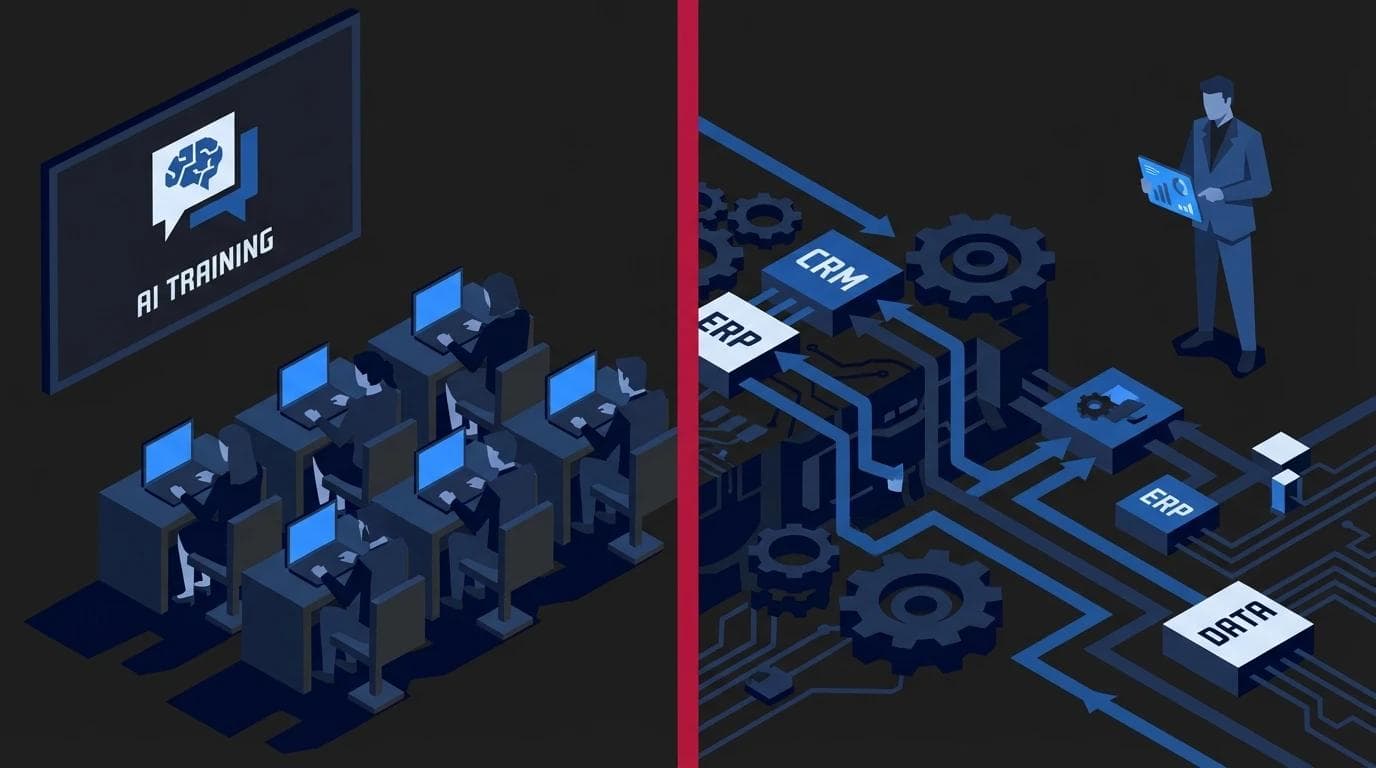
Employee resistance to new technology is a natural reaction that can be mitigated through education and showing improvements in daily work. A very effective solution is dedicated AI training for business, which helps staff become familiar with new interfaces and the automation of repetitive tasks.
- Involving employees in design - gathering feedback on what is most bothersome in the current paper flow increases acceptance of the new system.
- Phased implementation - instead of a one-day revolution, it is better to introduce digital processes department by department, allowing for problems to be resolved as they arise.
- Structure improvement - any business process optimization before IT implementation makes the system more intuitive and user-friendly for the end user.
How long does it take to implement a dedicated e-documentation system?
The time needed for implementation depends on the scale of the enterprise but usually takes from a few weeks to a few months. What to do with old papers? We always advise digitalizing active contracts and leaving archived ones alone while structuring them. E-documentation should concern the company "from today forward" to avoid stalling implementation with exhaustive archive scanning. By choosing dedicated applications, the process begins with an analysis that avoids design errors. If your goal is process automation, you can implement it modularly, reducing the consequences of digitalization conducted without a clear vision of business goals.