SUBJECT: Benefits of Process Digitalization and Measurable ROI
Benefits of Business Process Digitalization and Measurable ROI for Companies
> Key benefits of process digitalization in a modern enterprise
The primary benefit of digitalization is not just modernizing the company's image, but above all, permanently decoupling revenue growth from the need to increase headcount in administration. A truly digitalized process, such as automated order and invoice handling, allows your enterprise to grow threefold without needing to hire a single new office worker. As a result, technology takes over the role of an intermediary in information flow, and your team is freed from repetitive tasks to focus on work that actually builds a market advantage and generates profits.
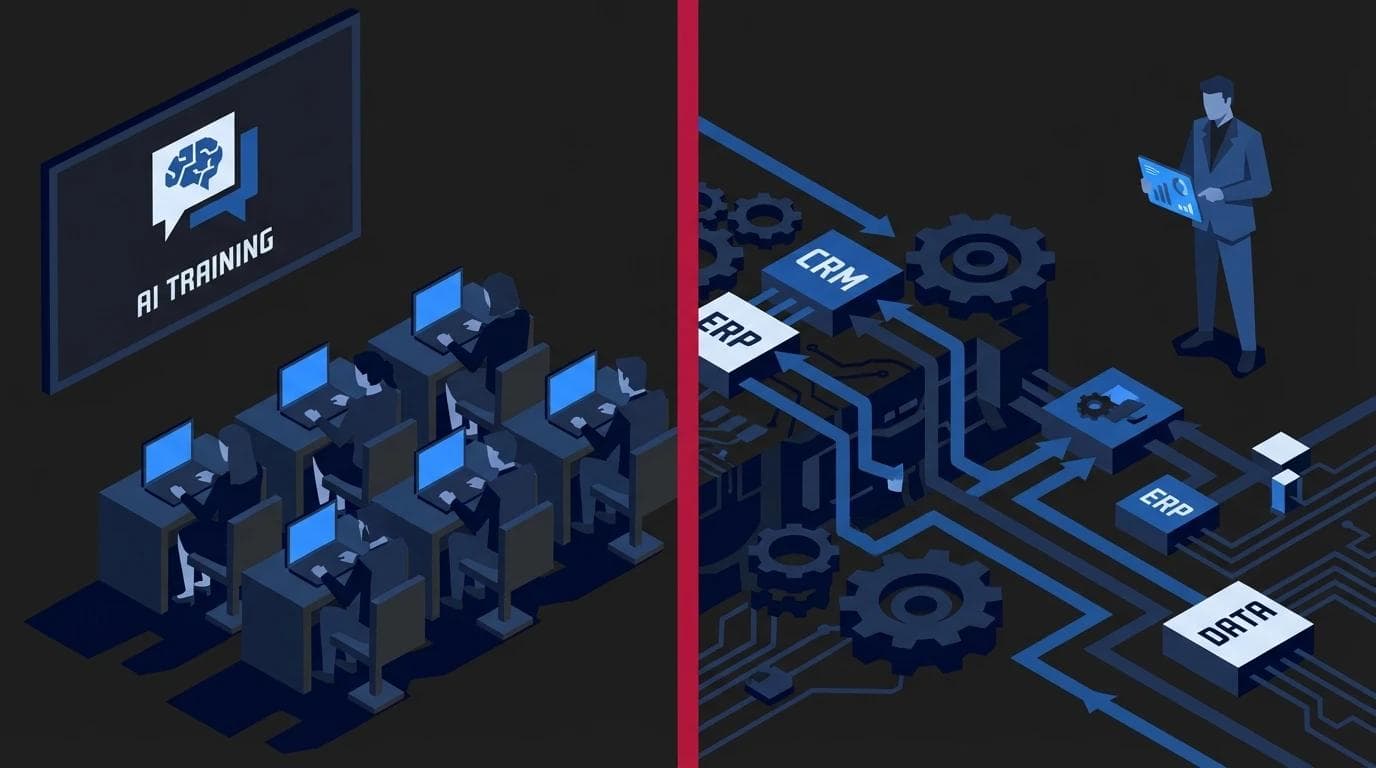
A modern digitalization strategy involves building systems that become the company's operational foundation rather than just a digital add-on. Properly designed custom applications eliminate bottlenecks that require manual intervention from multiple people in traditional models. Instead of looking for more hands to work in the HR or logistics departments, it is better to invest in AI training for business so that current staff can manage advanced algorithms.
Key benefits of digital transformation include:
- Operational scalability - systems can process any number of documents without fatigue, allowing the company to grow rapidly without generating proportional fixed costs.
- Increased team efficiency - we remove the role of data relays from employees, allowing them to dedicate their time to premium customer service or product development.
- Data consistency and security - a precise digitization process ensures that every piece of information in the system is up-to-date and easily accessible to authorized individuals.
- Instant access to information - effective document digitalization reduces the time spent searching for necessary files from many minutes to a fraction of a second.
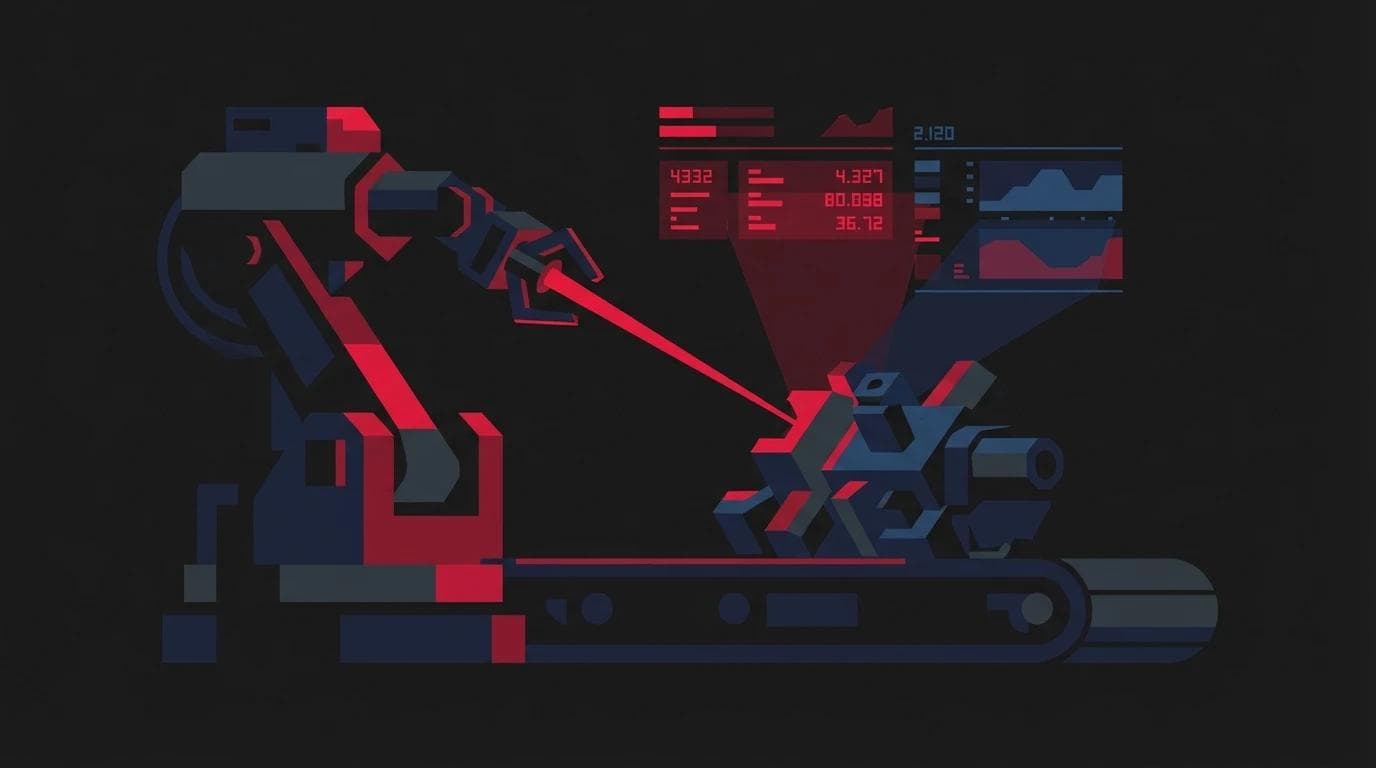
By implementing comprehensive process automation, you gain full control over the workflow and eliminate errors resulting from the human factor. In more demanding industrial environments, digitalization can be extended to IoT and hardware, connecting the physical and digital worlds into one cohesive ecosystem. If you are wondering how to start this process in your organization, we encourage you to contact our experts, who will help you choose technology tailored to your business goals.
> Key insights on the profitability of digital transformation
The profitability of digital transformation does not stem from the mere fact of implementing modern tools, but from the precise alignment of technology with real business needs. Our implementations provide solid conclusions showing that financial success depends on a strategic approach to intellectual property and the elimination of operational errors.
- Proprietary ecosystem instead of subscriptions - simply purchasing an expensive SaaS subscription is not digitalization; it is just a new cost that burdens the margin. A true digitalization strategy should be based on building your own automated ecosystem, which avoids dependency on vendors and builds the company's technological value.
- Fast return on investment in automation - well-designed automation targeting a company's bottleneck usually pays for itself within 6 to 12 months. When process automation relieves the team of the most tedious tasks, the company recovers hundreds of working hours that can be turned into the development of new sales channels.
- Direct margin protection - reducing human errors, such as mistakes in pricing or losing documentation, directly saves the profitability of every order. Properly implemented document digitalization eliminates information chaos and prevents financial losses resulting from incomplete data.
- No technological ceiling - scaling a business requires tools that do not limit growth with rigid features. In such situations, custom applications work best because they offer full flexibility and the ability to integrate with non-standard solutions, such as IoT and hardware.
- Data consistency as a foundation for decisions - a correctly conducted digitization process ensures that every business decision is based on facts, not assumptions. Using modern technologies, including through AI training for business, allows management to better understand market dynamics and react faster to customer needs.
> Comparing the costs of analog and digital processes in numbers
A direct comparison of the costs of analog and digital processes shows that automation can reduce operating expenses by more than 80% annually. While the traditional model relies on linear cost growth alongside the scale of operations, digital solutions are characterized by a higher initial cost that, after amortization, trends toward minimal fixed fees. BLUF: Implementing digital technologies eliminates hidden manual labor costs, where the annual cost of a single simple repetitive task performed by an employee can exceed 30,000 PLN, while the cost of maintaining a script is a fraction of that amount.
Let's talk about specific numbers that best illustrate the scale of waste in many Polish SMEs. Suppose a skilled employee, whose labor cost to the company is approximately 60 PLN/h, spends just 2 hours a day on routine tasks, such as manually rewriting orders from email inboxes into the ERP system. Monthly, this means over 2,400 PLN wasted on a task that generates no added value. On an annual scale, one person performing a robot's job costs the organization nearly 30,000 PLN. We build an invisible script that performs this task in a fraction of a second, 24/7. The one-time implementation cost pays off instantly, and then the process runs for a fraction of that cost, covering only server maintenance.
The choice between the traditional and modern model is primarily a decision about profitability:
- Time to complete a task - in the analog model, processing a document takes from several to a dozen minutes, while a properly conducted digitization process reduces this time to milliseconds.
- Cost scalability - with a 100% increase in the number of orders, the analog model requires hiring a new person or paying for overtime, whereas custom applications will handle the increased traffic without generating additional financial outlays because they have no technological ceiling.
- Error risk and correction costs - correcting manual mistakes is a hidden cost that is almost completely eliminated in systems using process automation, which translates into real budget savings.
For transformation to be truly profitable, a well-thought-out digitalization financing strategy is essential, which involves building your own technological assets instead of relying on expensive SaaS subscriptions. Many companies start this journey with simple improvements, like document digitalization, to gradually move to more advanced projects involving IoT and hardware. Professional AI training for business can support the staff adaptation process, preparing the team to work in an automated environment. If you want to accurately calculate potential savings in your company and get an implementation quote, we invite you to contact our experts.
> List of 5 ROI metrics proving the profitability of digitalization
Measuring the return on investment in technology does not have to be based on guesswork. In business practice, we focus on hard data that directly correlates with the company's financial result. Here are 5 key indicators that allow for a precise assessment of implementation profitability.
- Recovered man-hours - this is the foundation of ROI calculations. We analyze how much time employees (especially sales departments) have regained for actual sales and relationship building when process automation took over repetitive tasks.
- Cost of processing a single order - this indicator shows a downward trend with an increasing scale of operations, provided that the implemented data digitization process eliminates bottlenecks and manual information processing.
- Error Rate - automation ensures that the number of mistakes drops almost to zero. A script, unlike a human, does not have a bad day and always processes data according to the same pattern.
- Lead Time - reducing the cycle from the first inquiry to sending an offer from several days to just minutes is a powerful market advantage. Such responsiveness is provided by custom applications that integrate scattered information sources into one fluid flow.
- Savings on licenses - often a single, well-designed integration allows for the cancellation of several external subscription tools. This is a key element if our domain is a digitalization financing strategy based on building your own technological wealth instead of eternal renting.
Reduction of man-hours and personnel costs through automation
The FTE (Full-Time Equivalent) indicator allows for the precise determination of how many full-time positions we regain thanks to technology. Instead of reducing headcount, companies usually shift skilled workers to tasks requiring creativity and empathy, which IT systems cannot replace. Automating repetitive, tedious activities not only lowers personnel costs per product unit but also drastically increases team satisfaction with their work.
Increased operational throughput without increasing headcount
Scaling a business in the traditional model usually involves a linear increase in hiring costs. Digitalization breaks this pattern, allowing for the handling of a many times larger volume of orders while maintaining the same staff size. Using modern AI training for business, management learns how to optimally use available algorithms for resource management. As a result, technology becomes a lever that allows the company to grow without the need to constantly search for new employees in a difficult labor market.
> How to build technological ownership instead of paying SaaS subscriptions
Renting ready-made software (SaaS) looks great in the first month, but in the long run, it often punishes entrepreneurs for their success. In this model, every subsequent e-commerce transaction or new user in the system can eat away at your margin through rising subscription fees. A proper digitalization financing strategy and code ownership allows you to avoid these traps, turning eternal operating costs (OpEx) into an investment in capital and company assets (CapEx).
At 01tech, we change this paradigm by building dedicated infrastructure for our clients that is paid for once. When your company grows to the originally specified scale, software costs do not budge because you own the technology. By creating custom applications, you eliminate the technological ceiling and gain full control over the source code, which is crucial for building long-term enterprise value.
The advantages of owning technology include several key areas:
- Cost predictability - once-funded infrastructure does not generate additional fees per transaction, allowing for precise budget planning at a large scale.
- Digital assets of the company - proprietary software becomes a fixed asset that increases the company's valuation in the event of a potential sale or merger.
- No vendor lock-in - owning your code means freedom from price changes by external corporations and the sudden disabling of necessary functionalities by a SaaS provider.
- Optimization for unique processes - instead of changing the company to fit a ready-made system, you implement process automation perfectly tailored to your business model.
Building your own technological ownership often starts with fundamental changes, such as a data digitization process or modern document digitalization, which allow for cutting ties with outdated tools. In the case of more complex projects combining IoT and hardware with a software layer, the ownership model is the only way to maintain full operational sovereignty. To successfully go through this process, it is worth investing in AI training for business for the management team or establishing direct contact with a technological partner who will help design the architecture of your digital independence.
> Q&A on digitalization benefits and IT profitability
Investing in modern technologies often raises concerns about whether costs will outweigh benefits; however, in the SME sector, a wisely planned digitalization financing strategy allows for avoiding the traps of expensive subscriptions. The barrier to entry for owning technology is lowering because effective custom applications can be built using the small steps method (MVP), targeting a single, most painful operational problem.
How long does it take for an investment in custom software to pay off?
Many entrepreneurs ask when they will see real profits in their accounts. The first effects in the form of freed-up employee time are usually visible as early as the first month after system implementation, while full financial return (ROI) typically occurs within several to a dozen months. The speed of return depends on how precisely process automation eliminates repetitive, manual tasks that previously generated hidden labor costs.
Dedicated solutions are not the exclusive domain of large corporations. A properly scaled project often turns out to be cheaper than paying annual licenses imposed by tech giants, especially when the company retains full code ownership. To optimally plan the budget, it is worth analyzing the entire digitization process, which allows for eliminating redundant functions and focusing on modules generating the greatest value.
Which processes in SMEs bring the greatest savings after digitalization?
The key to success is avoiding digitalizing the entire company at once. It is best to start with an audit of one, worst-performing area where the team most often complains about burdensome paperwork. In practice, the greatest optimization potential is shown by:
- Document flow - efficient document digitalization reduces the time for approving invoices or contracts from days to minutes.
- Logistics and warehousing - implementing IoT and hardware solutions allows for real-time resource tracking and the reduction of picking errors.
- Reporting and data analysis - automatic data collection eliminates human errors when creating summaries in spreadsheets.
- Team competencies - investing in AI training for business prepares the staff to operate new tools, which maximizes the profitability of the entire implementation.
If you have doubts about which area of your company generates the most unnecessary costs, direct contact with a technical team will allow for the quick identification of bottlenecks and a quote for a high-priority ROI implementation.