SUBJECT: Custom AI Assistants for Business - How to Build GPTs

Custom AI assistants in business - how to train your team in building Custom GPTs
> How to conduct AI tool training focused on creating Custom GPTs
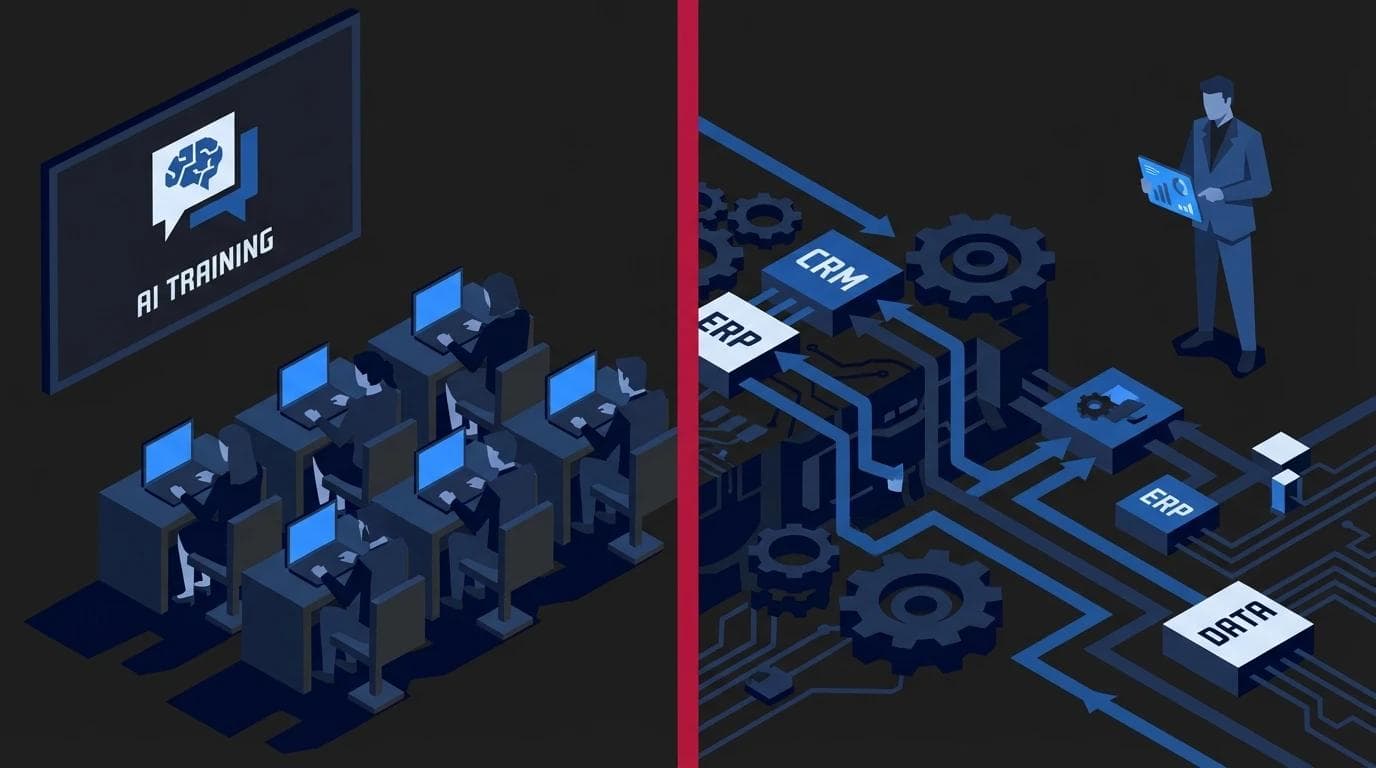
Effective training in AI tools should teach the team how to stop treating artificial intelligence as a toy and start building dedicated operational tools. The key to success is combining advanced prompting with the use of a company's internal knowledge base, which allows for the creation of so-called Custom GPTs - specialized assistants that function without writing a single line of code. Instead of teaching general chat usage, workshops must focus on solving specific business problems through bot architecture that knows only your organization's procedures.
Key takeaways from effective implementation:
- No more generic assistants - a lonely chat window with a white background is a thing of the past; the future belongs to bots trained for specific roles, such as a complaint expert or a contract analyst.
- Internal knowledge base as a foundation - training must teach the secure uploading of company files (Knowledge base) so that the bot does not invent answers but bases them on facts.
- Data security and GDPR - a key element is configuring privacy settings to prevent sensitive information from leaking into public models.
- Fast ROI through prototyping - employees should leave the workshop with a ready, working bot prototype that saves them at least 2-3 hours of work per week.
At 01tech, we believe that small businesses also deserve Enterprise-class code, which is why our ai training for business emphasizes practice over theory. We teach teams how to turn a "general assistant" into a highly specialized virtual expert who knows only your procedures and does not hallucinate data taken from the internet. This approach is an excellent first step before a company decides on more complex dedicated apps or full process automation.
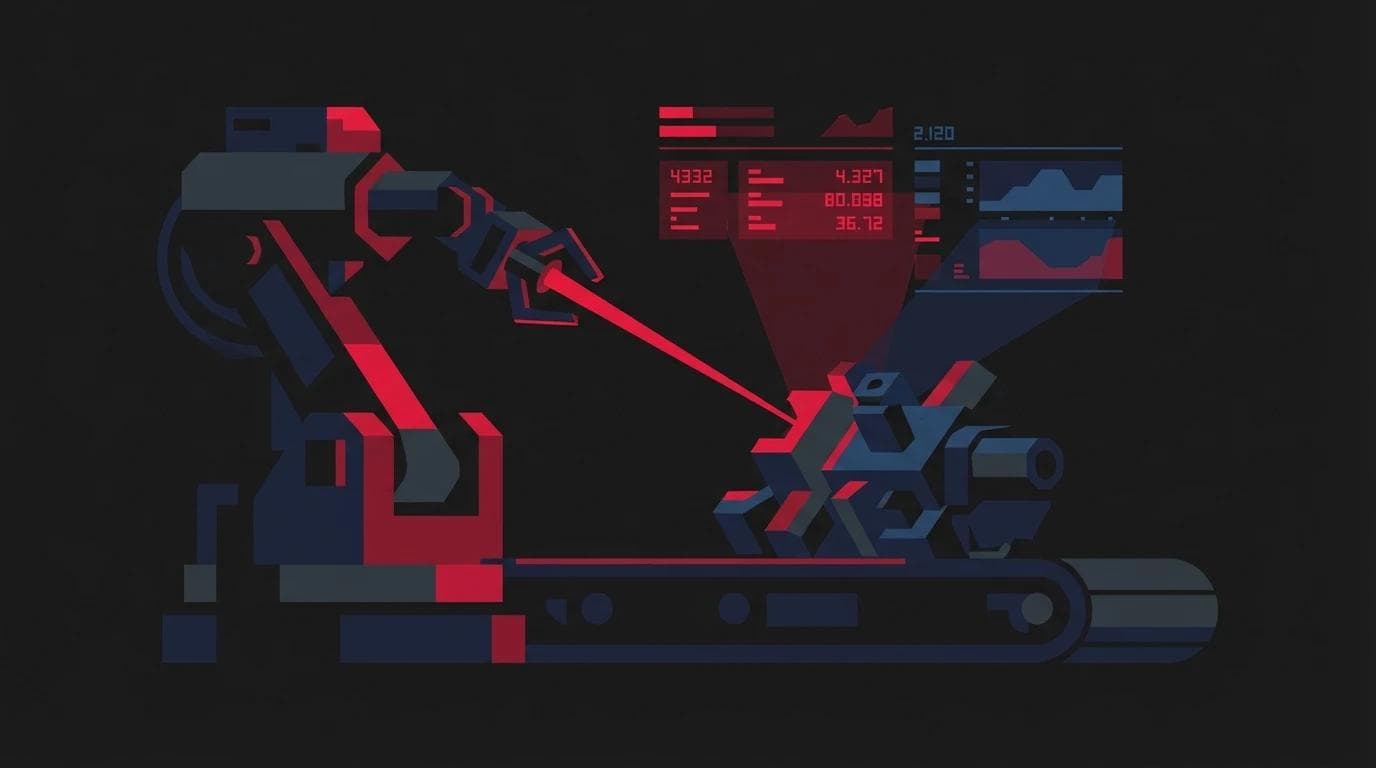
It is worth starting by mapping daily tasks that consume the most time. In the customer service department, this could be a bot analyzing inquiries against the terms and conditions, while in production, an assistant monitoring parameters from IoT and hardware systems. Comprehensive AI training for companies must take into account that the greatest risk today is AI security in the company, i.e., the uncontrolled use of free tools without proper knowledge of where the entered data goes. Creating your own bots in a closed environment is a safe alternative that allows you to realistically increase ROI from the first day after the workshops. Even owners of smaller businesses building online stores can use Custom GPTs to instantly generate product descriptions consistent with the brand's visual identity.
> Step 1 - selection and preparation of internal data for the knowledge base
Practical AI training for business does not start with bot configuration but with a critical look at your own documents. The iron engineering rule of Garbage In, Garbage Out (GIGO) applies here. If you feed the model outdated, contradictory, or chaotic data, you will get an assistant that misleads the team instead of helping them. Therefore, the first stage of implementation is rigorous digital hygiene.
Proper data digitalization and intellectual property security require going through a selection process before uploading files to the Knowledge section in Custom GPTs. An AI model does not have the intuition to distinguish a 2022 version of a procedure from a 2024 version if both are in its memory. A well-structured knowledge base is the only way to eliminate model hallucinations.
When preparing materials, the team should focus on three pillars:
- Format selection and structure - PDF files (with a text layer), DOCX, and TXT work best. Scans in the form of images without recognized text (OCR) should be avoided. Content should be divided into logical sections with clear headings, making it easier for semantic search algorithms to find fragments quickly.
- Resolving data conflicts - this is the most common mistake. If one file's instructions mention a 10% discount and another mentions 15%, the bot will provide a random value. Before uploading data, information should be merged into one, up-to-date "golden standard" of company knowledge.
- Anonymization and security filters - even though we use Enterprise versions, it is good practice to remove sensitive personal data (PII) and passwords from training documents. This minimizes the risks associated with shadow AI, i.e., uncontrolled information leaks outside official channels.
Only a foundation prepared this way allows for effective process automation, where AI agents operate on facts rather than outdated notes. Remember that bot quality is a direct reflection of the order in your documents. If your processes are too complex for simple files, it is worth considering dedicated apps that integrate databases in a structured and scalable way.
> Step 2 - workshop on configuring instructions and assigning a role to the assistant
The System Prompt (base instruction) is the skeleton of the assistant's behavior and the foundation of a secure AI implementation in an organization. For artificial intelligence to be a real support rather than an error generator, it must receive hard operational frameworks that define its identity, tone of voice, and scope of knowledge. At this stage of training, we design the digital personality of an employee tailored to the specifics of a particular department.
During the workshops, we teach that a properly formulated system instruction should contain three key elements:
- Definition of role and context - instead of a general query, we give the assistant a specific function, e.g., "You are an accounting expert for company X". This allows the model to activate appropriate linguistic and substantive resources.
- Indicating sources of truth - the assistant must know that its "world" is limited to the provided database. We introduce commands like: "Always base your answers exclusively on document Y".
- Absolute security protocol - this is where we eliminate the phenomenon of AI hallucinations. We teach how to write prohibitions against making things up: "If there is no answer in the source materials, you are strictly forbidden from confabulating - you must answer: I do not know".
This approach is crucial not only for simple chats but especially when building dedicated apps integrated with large language models (LLMs). Precise instruction configuration makes the team stop treating AI as a toy and start seeing it as a reliable work tool. This engineering approach to technology emphasizes business utility over temporary fascination with algorithmic capabilities.
Together with the team, we test various scenarios to check the assistant's resistance to attempts to lead it outside the framework. This practical exercise shows why public ChatGPT differs from Enterprise solutions - in closed environments, we have full control over what the assistant says and what data it processes. Thanks to this, AI training for business realistically eliminates the risk of information leaks or incorrect advice.
The final result of the workshop is a set of ready-made system instructions that can be immediately implemented in daily processes. Once the instructions are ready, we can move on to the next step, which is advanced process automation, where the configured assistant becomes a link in a chain of tasks, performing boring work for your specialists.
> Step 3 - testing and iterative improvement of bots in teams
Creating an AI assistant does not end with entering instructions. This is just the beginning of a process we at 01tech call the "sandbox" phase. Before a bot is made available to an entire department, it must pass through a fire of control questions. Effective AI training for business places great emphasis on this stage, as this is where we verify whether theory meets business practice.
Once the assistant is created, we lock it in a so-called "sandbox". The team asks it the most difficult and tricky questions from daily work, i.e., edge cases. These are boundary situations where standard instructions might fail. When the bot makes a mistake, we show employees how to appropriately modify the main instructions to "patch" this logical gap. Such engineering requires patience, but the effect stays with the company permanently.
This process includes several key actions:
- Testing on real data - employees use archived emails, reports, or inquiries to check how the bot handles context specific to their industry.
- Catching logical gaps - if the assistant ignores important security procedures, the instruction must be supplemented with hard prohibitions and commands.
- Iterative prompt improvement - instead of writing a new instruction from scratch, we modify the existing one, adding examples (Few-Shot Prompting), which drastically increases the quality of responses.
It is worth remembering that bots are often the first step toward a deeper process change. If the team notices that the assistant performs repetitive operations on data, the natural development is professional process automation, which completely eliminates human involvement in boring tasks. Complex problems requiring unique architecture can, in turn, transform into full-fledged dedicated apps, giving full control over code and data.
The entire testing process is the foundation for building lasting technological competencies. Without a reliable feedback phase, AI implementation becomes only a temporary curiosity rather than a strategic work tool. The sandbox method allows for the elimination of risks before sharing the bot with a wider audience.
> Data security and ethics in building Custom GPTs
The fundamental challenge we address during every AI tool training session is the thin line between innovation and digital security. Building your own assistants (Custom GPTs) requires the team to understand the difference between public models and a secure Enterprise environment. At 01tech, we place great emphasis on ensuring that every company implementing artificial intelligence uses secure spaces (Enterprise / API). This is a critical training module because the software provider then guarantees in the SLA that data uploaded to the assistant does not train global models and remains exclusively your property.
Secure implementation is not just about choosing a tool but, above all, about information hygiene. During practical workshops, we always repeat the 01tech hard rule to teams - we only upload clean business procedures and rules to the assistant's knowledge base, and under no circumstances do we place live customer databases with sensitive IDs and addresses there. Ignoring these rules is a direct path to uncontrolled Shadow AI, generating legal and image risks.
If your process requires operating on critical resources, professional AI training for business will help you decide when it is worth switching to dedicated apps, which allow for full data isolation within your own infrastructure. For most organizations, however, the following ethics decalogue for building GPTs is sufficient:
- License verification - ensure that the subscription (e.g., ChatGPT Team) disables model training on your queries.
- Document anonymization - before uploading a file to the bot's knowledge base, remove specific personal data of employees and contractors.
- Principle of limited trust - the bot should support the process (e.g., report analysis) rather than store sensitive data permanently.
To help IT departments control this process, it is worth using established standards, such as a secure AI implementation checklist, which organizes GDPR and AI Act issues. Remember that well-designed process automation always relies on secure data flow. In the case of more complex systems connecting digital data with the physical world, IoT and hardware solutions require even higher encryption protocols, which should always be part of a broader digital transformation strategy.
> From a simple bot to full automation - when is Custom GPT not enough?
Introducing proprietary assistants within OpenAI is an excellent testing ground that allows teams to understand the potential of large language models. While initial AI training for business focuses on prompt optimization and creating simple text agents, almost every growing company eventually reaches a so-called technological ceiling. Custom GPTs are great at analyzing uploaded documents or generating content, but their capabilities end where real operational work on the living organism of the enterprise begins.
The difference between a bot and an engineering system comes down to action. As engineers, we observe that a true leap in efficiency occurs when the assistant stops just suggesting how to perform a task and starts executing it. A classic example is a warehouse system: a simple bot can explain the return procedure to an employee, but it is only process automation based on APIs that allows AI to independently enter the database, verify the item's status, and automatically change the order status without human intervention. At this stage, tool usage training smoothly transitions into advanced technology implementation.
When is it worth abandoning ready-made no-code blocks in favor of custom solutions?
- Need for integration with legacy systems - if your ERP or CRM system does not have a ready-made connector with AI platforms, writing a dedicated technological bridge in Python or Node.js is required.
- Data security and privacy - for critical data that you do not want to send to public clouds, dedicated apps with locally hosted open-source models are the optimal choice.
- Complex business logic - multi-agent systems that must communicate between departments (e.g., automatic invoicing linked to logistics) require a rigid code structure that no chatbot can provide.
- Scalability and costs - with a very high number of queries, subscription fees for each user become inefficient, and own infrastructure allows for a drastic reduction in operational costs.
Moving from simple assistants to full-scale engineering solutions is the moment when a company stops playing with artificial intelligence and starts using it to build a lasting market advantage. A solid guide to AI training for companies should always include this development path - from understanding a prompt, through building a Custom GPT, to designing systems that work in the background of the company as invisible, digital employees.
> FAQ - frequently asked questions about building your own AI assistants
Implementing your own AI assistants in a company does not require knowledge of programming languages. The entire process is based on natural language and business logic, making this tool accessible to every department - from HR to sales. The key to success is a reliably prepared knowledge base and the analytical skills of the team, and the first effective prototypes can be created after a few hours of workshops. Thanks to the universality of instructions, the created solutions remain durable and can be migrated between different language models in the future.
Do employees need to know how to program to create Custom GPTs?
Creating your own agents within AI training for business takes place entirely using natural language. Instead of writing code, the employee talks to the configurator, describing the bot's role, goal, and limitations. The greatest value here is not technical proficiency but analytical skills and the ability to precisely define processes. This is why professional training focuses on learning so-called prompt engineering - the art of asking questions and formulating instructions that the machine will understand perfectly.
What data is safest for creating a bot's knowledge base?
High-quality documentation is the foundation of an effective assistant. Process files, internal product FAQ bases, and brand communication standards work best as ideal input materials. However, it is important to remember the rules of AI security in the company - public models must not be fed with sensitive customer data or trade secrets without proper infrastructure security. Every employee should also be aware of data digitalization and intellectual property security to know how to select materials in accordance with upcoming regulations.
How long does it take to train a team in building assistants?
Usually, one day of intensive workshops is enough for the team to understand the mechanics of the tools and create the first working prototypes. Comprehensive AI training for companies allows for a quick jump from theory to practice, where under the guidance of an expert, employees build solutions that realistically relieve them of daily duties. From a leader's perspective, such training is an investment in lasting assets. Although technology evolves, the analytical work put in, cleaned base documents, and tested instructions can be very easily migrated from one model (e.g., OpenAI) to another (e.g., Claude) through the environment we build. For more complex needs, these same foundations allow for more efficient implementation of advanced process automation.